
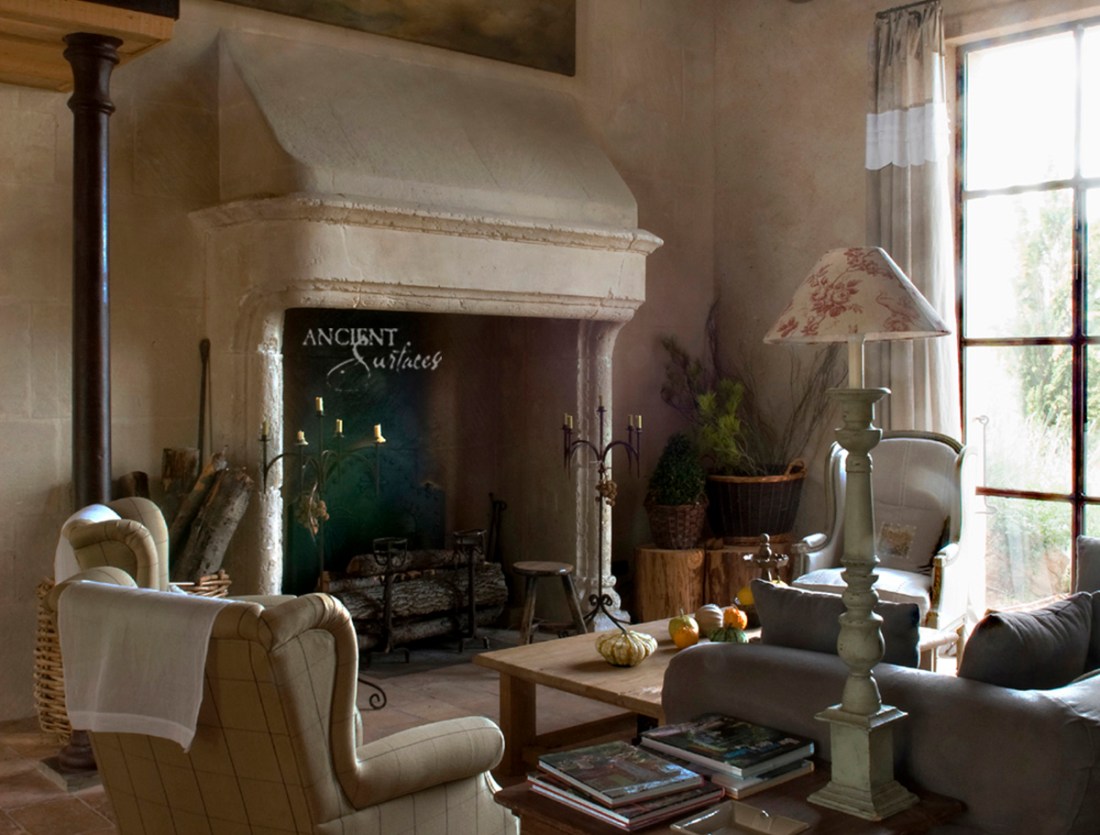
Isolated and scattered across the fertile Medieval French country side, old farms were built according to two techniques. One mixed clay earth, mud filling between weaving timer and stone to make up its walls, the other was strictly made up of Thick limestone walls.


The famous “Sarrasine” fireplaces (for foreign in French perhaps referring to the Moors or the Normans) common to both types of Medieval French Farmhouses were shrouded in mysteries. This class of ancient limestone fireplaces which sport massive firebox openings, reminds historians of the Gallic fireplaces found although the region of ‘Bresse’.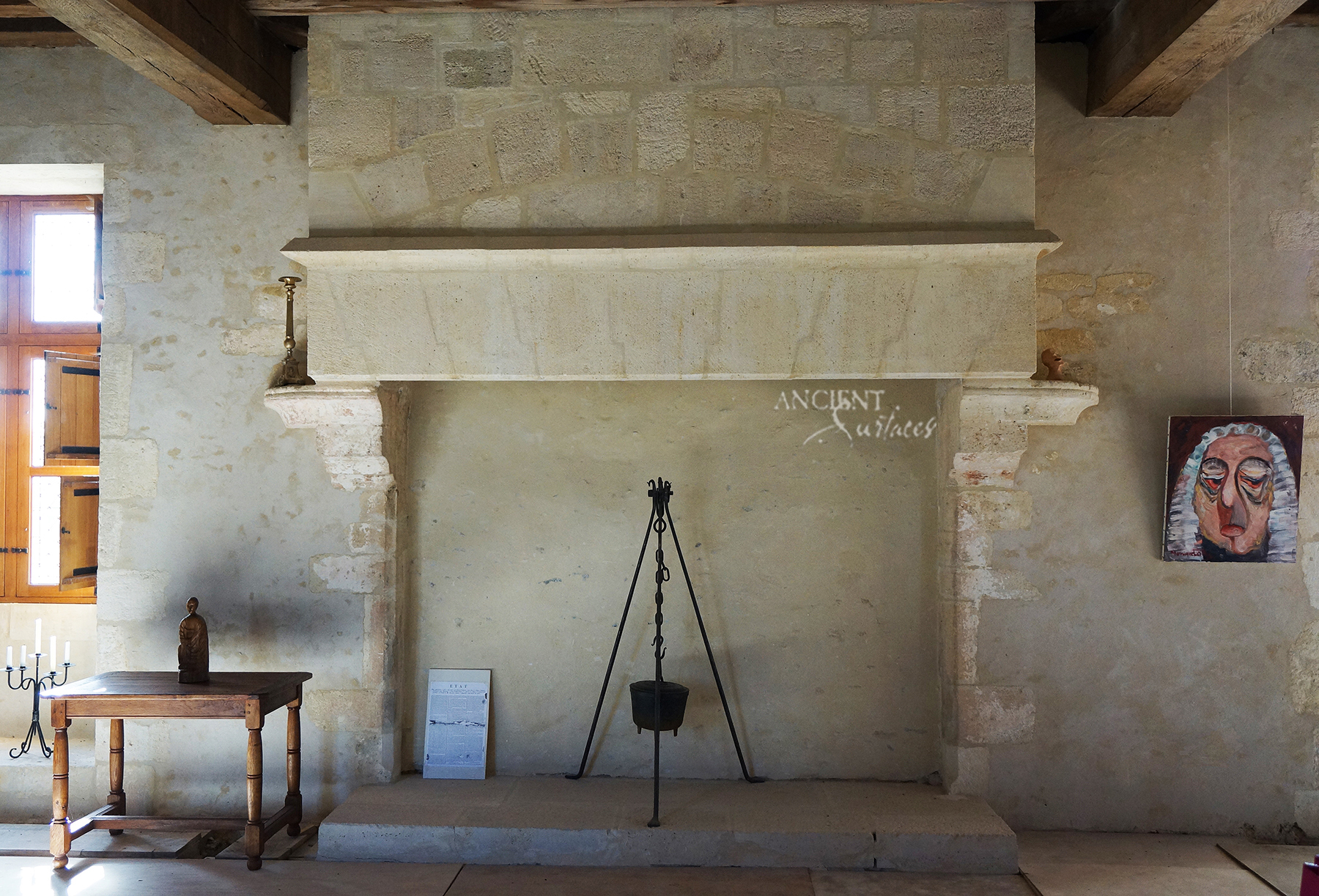
Since the 16th century, Bresse cultivates maize which was brought in into Europe from the Newly discovered continent of America. In less than 50 years this plant transformed the French farmland serving as an ideal fuel for both man and beast alike.  Farmers now had somewhere between 30 to 50% more money coming into their pouches every year thanks to corn. The Bress Farmers became the ‘Nouveaux Rich’ of their time and their newly acquired fortunes earned them famous nicknames such as bressans “yellow belly farmers”.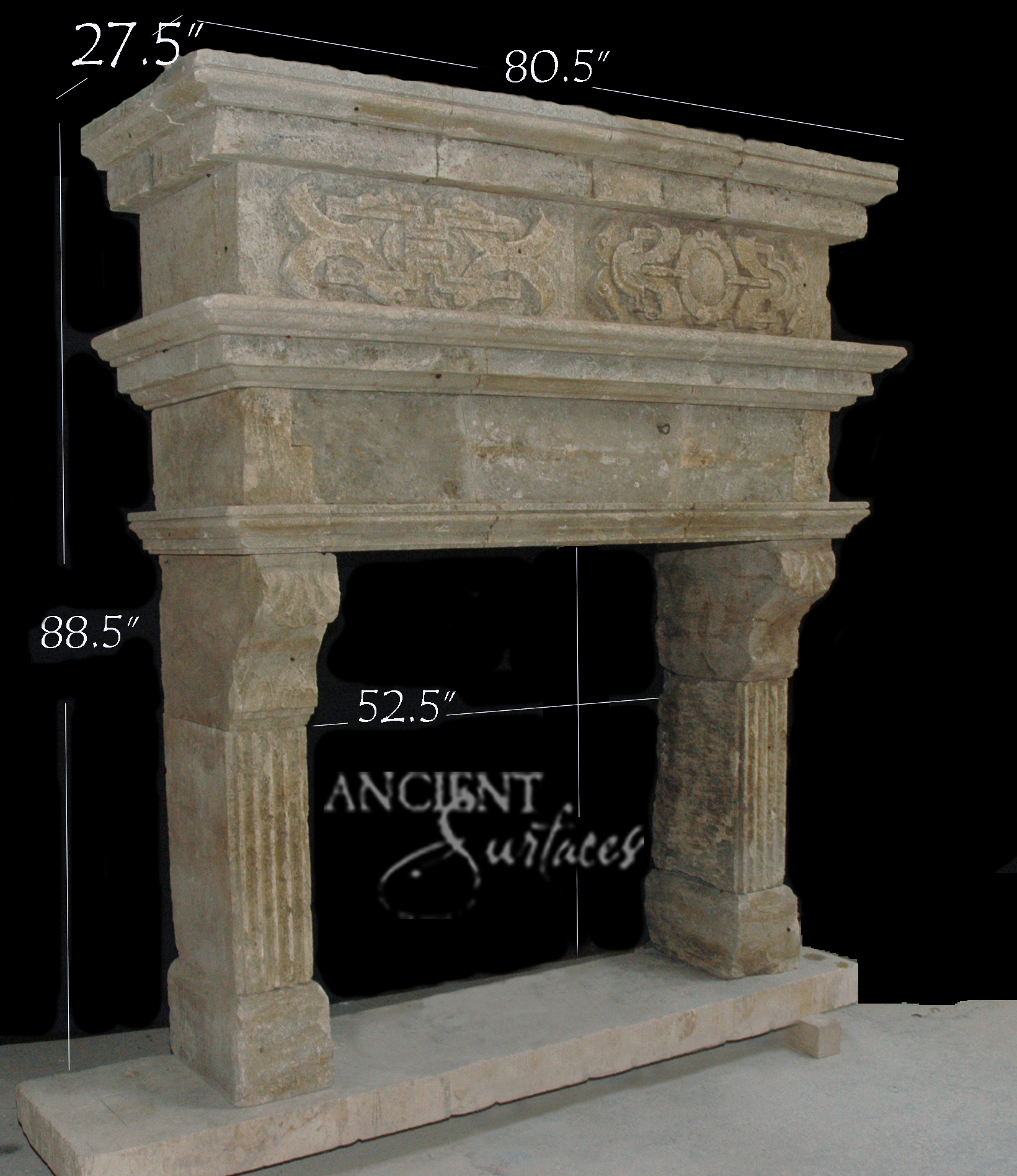
Saracen fireplaces of the Bressan yellow bellies!
The lasting evidence of Bressan flourishing rural past, can still be witnessed by the priceless architectural treasures still found in their surviving farmhouses. The millions of ancient hearthed fireplaces stood the test of time and have become the symbol of the Bressan farm house and formed the basis of its architectural heritage.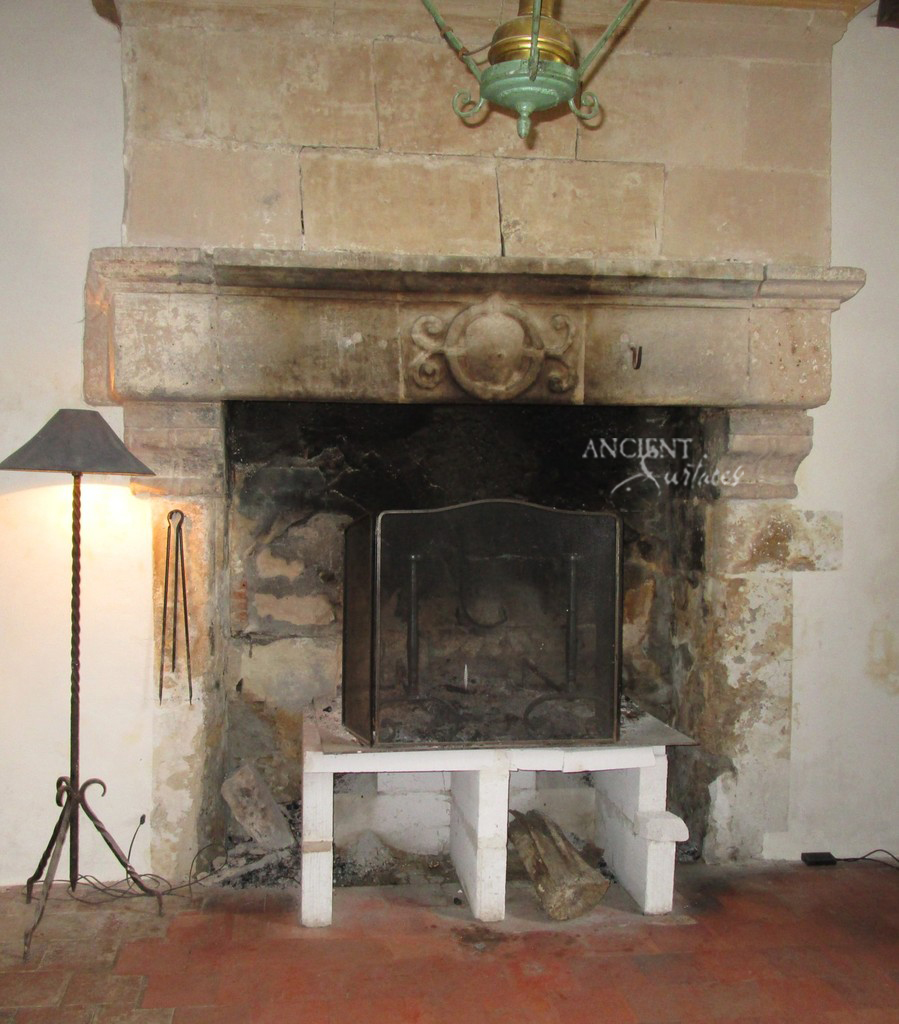
Wealthy farmers splurged real well on massive living room, kitchen and dining room fireplaces. back then a good fireplace could cost the family as much as their entire farm house but corn was plenty and the money kept on flowing.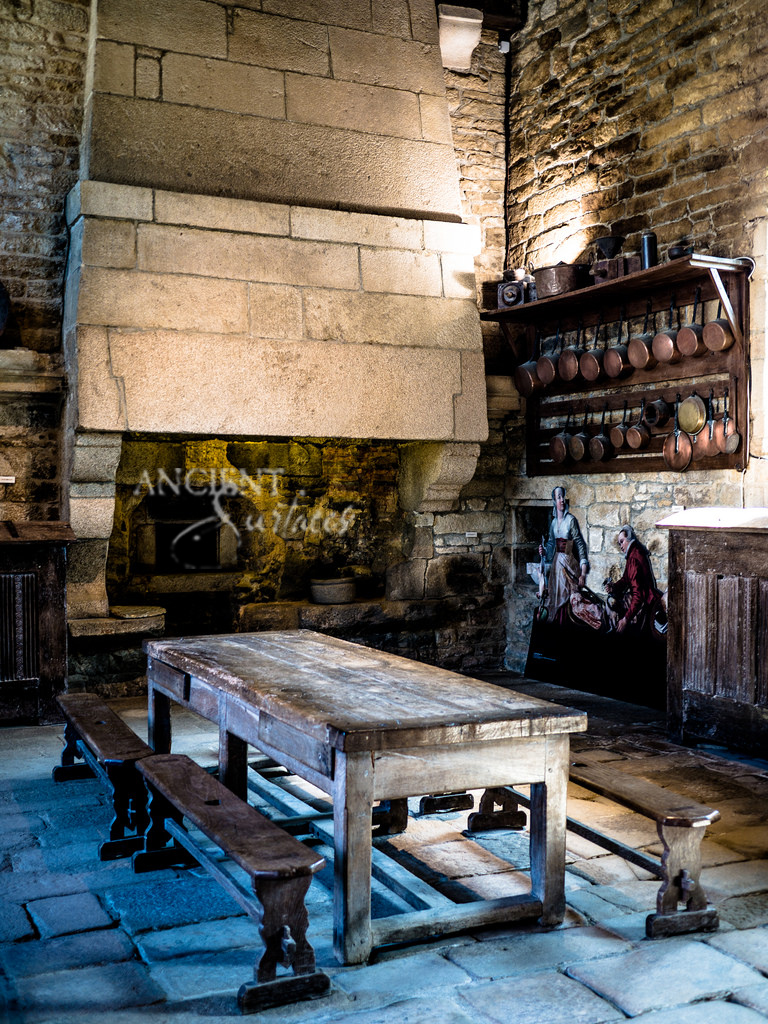
What better way to keep up with the ‘Pierres’ than having a bigger and meaner fireplaces than they did?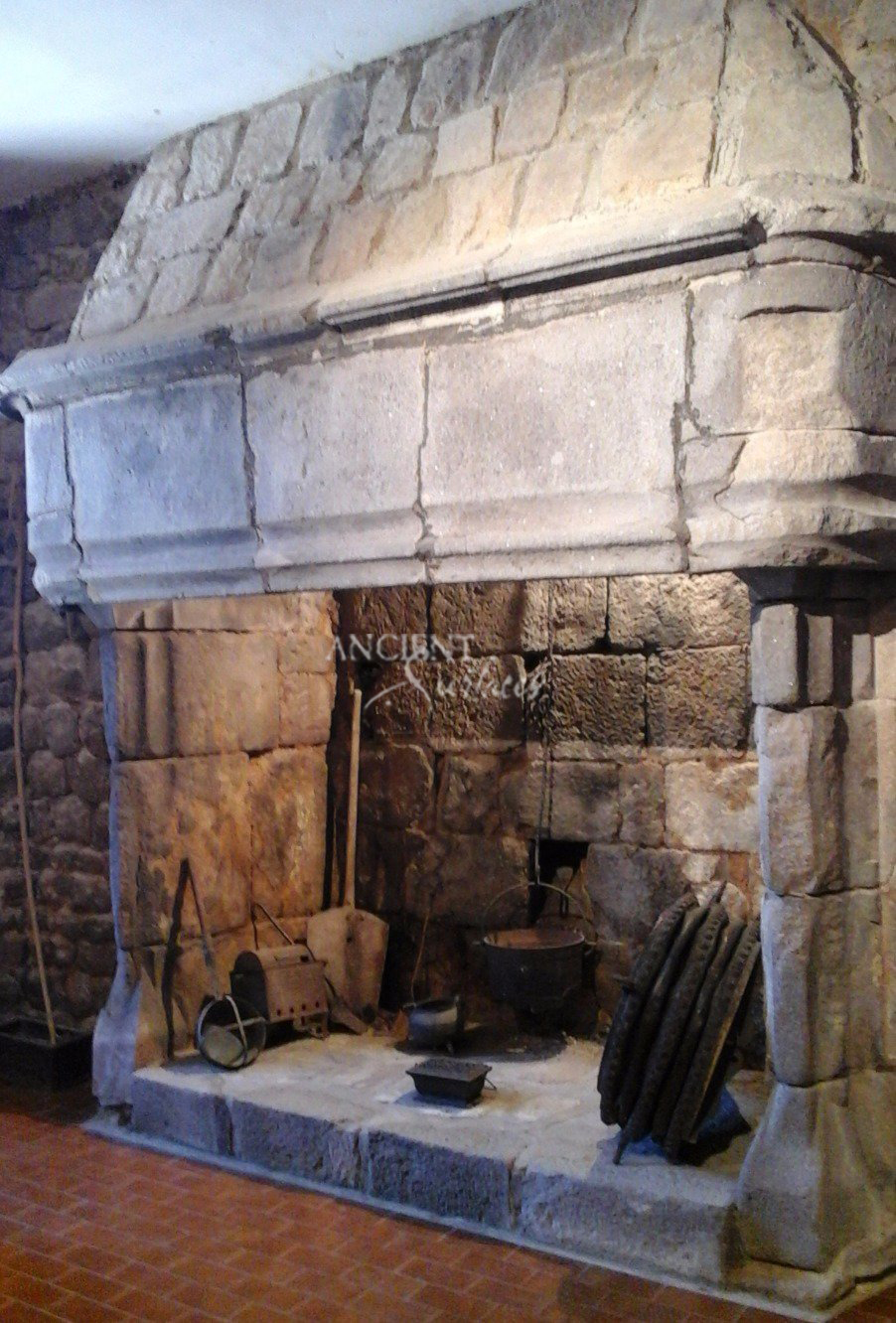
Consisting of a central hearth, reminiscent of the original hearth, these monumental Fireplace mantles are called “diffusion heated fireplaces”, “wide heated hearths”, “large walk-through fireplaces” or “Bressane style fireplaces”.
The term “Saracen” or “Sarrasine” spreads in the 16th century, perhaps in connection with the mysterious era of the Crusaders when the French fought a prolonged war against the North African Moors, the Turks, The Arabian kingdoms of Andalusia and Egypt, and Saladin’s hoards. Intrigued by these strange architecture that was culturally mixed, the less educated French Farmer started calling their Fireplaces foreign as if they were the fireplaces of a foreign invader or a ‘Saracen’ hence the term “Saracen fireplaces”.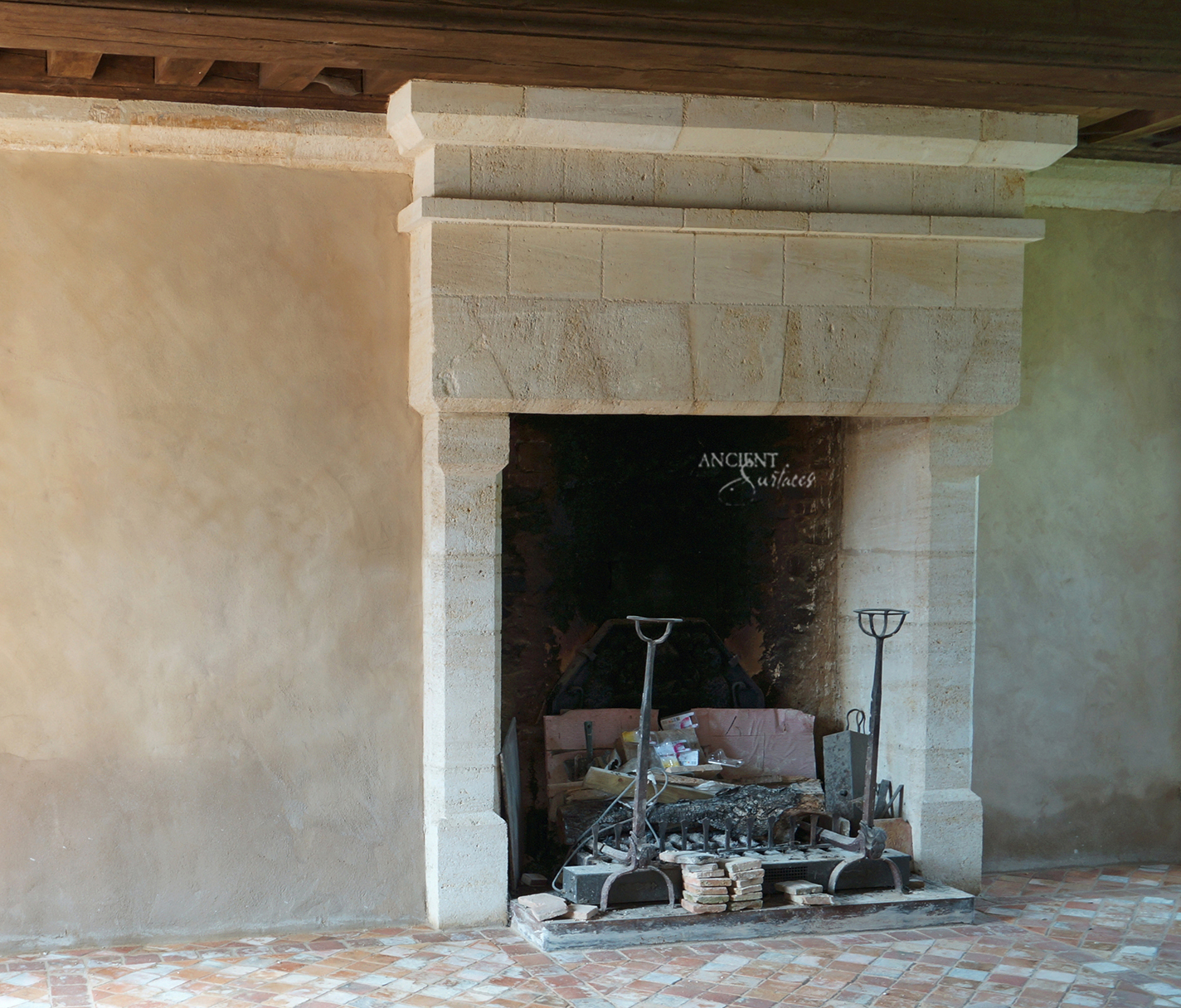
Another Hypotheses on Saracen chimneys can be likened to traditional Aragonese chimneys from the Upper Aragon region, in the Spanish Pyrenees, that were structurally quite similar to the French farmhouse fireplaces.
The academic jury is still out on the true origins of the Sarrasine fireplaces and for now at least these amazing fireplaces retain their shrouded of mystery.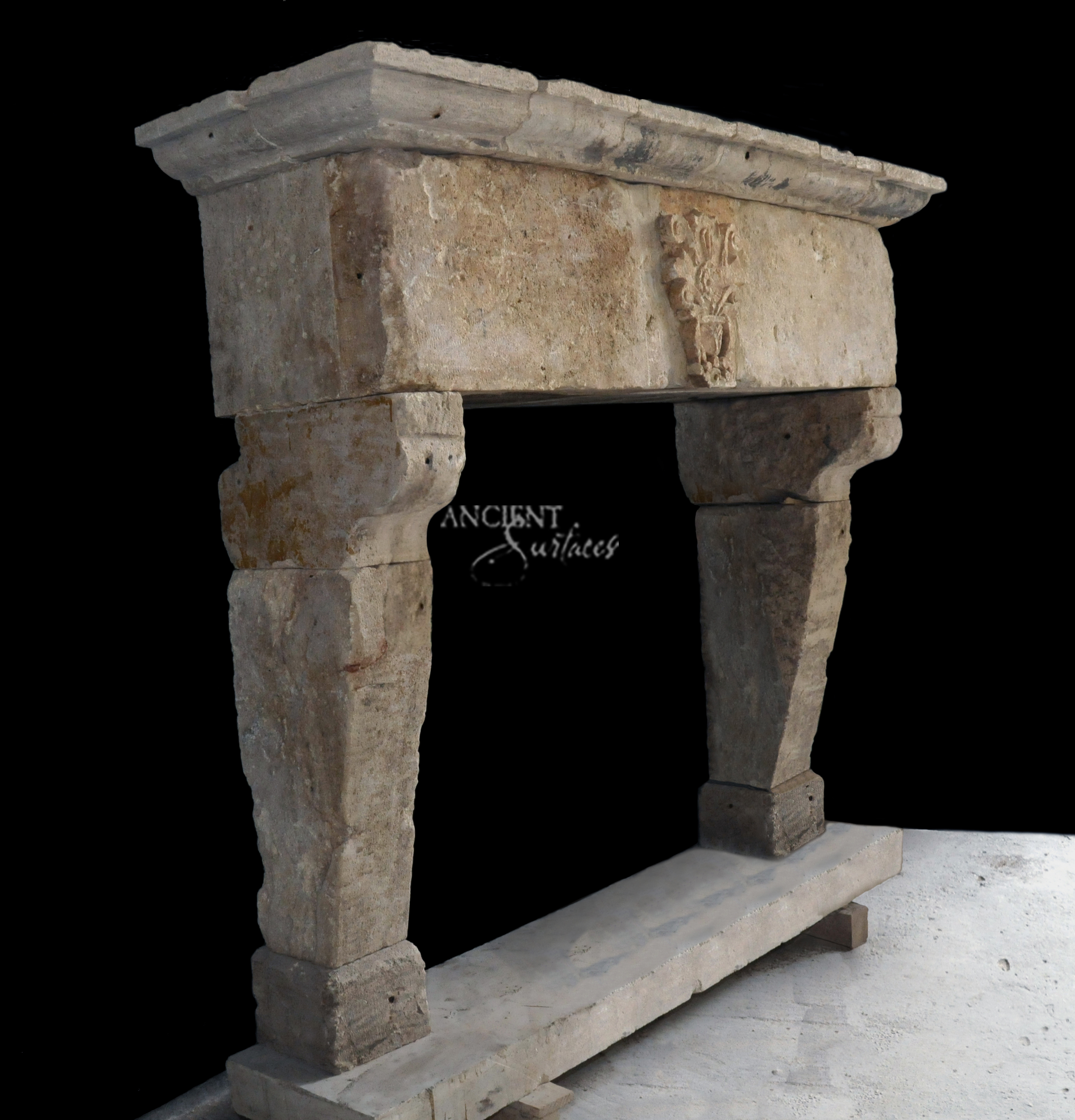
Here are a few notable Bressian fireplaces worth noting:
– Polygonal (The Planons in Saint-Cyr-sur-Menthon …)
– Square pyramid (The Forest at St Trivier-de-Courtes, The Bresse Field in Romenay …)
– Reliquary (The Mount at Chevroux …)
– Square terminal lantern (The Sougey in Montrevel-en-Bresse …) 
In some cases, monumental fireplace featured a “archebanc” (or the bench-chest raised hearth) that once hosted the regional Lords, the elders of the family or distinguished guests.
By the eighteenth century, these chimneys were already considered of another age; from there, certainly, the name of “sarrasines” felt even more fitting to those pieces far from any Moorish connection.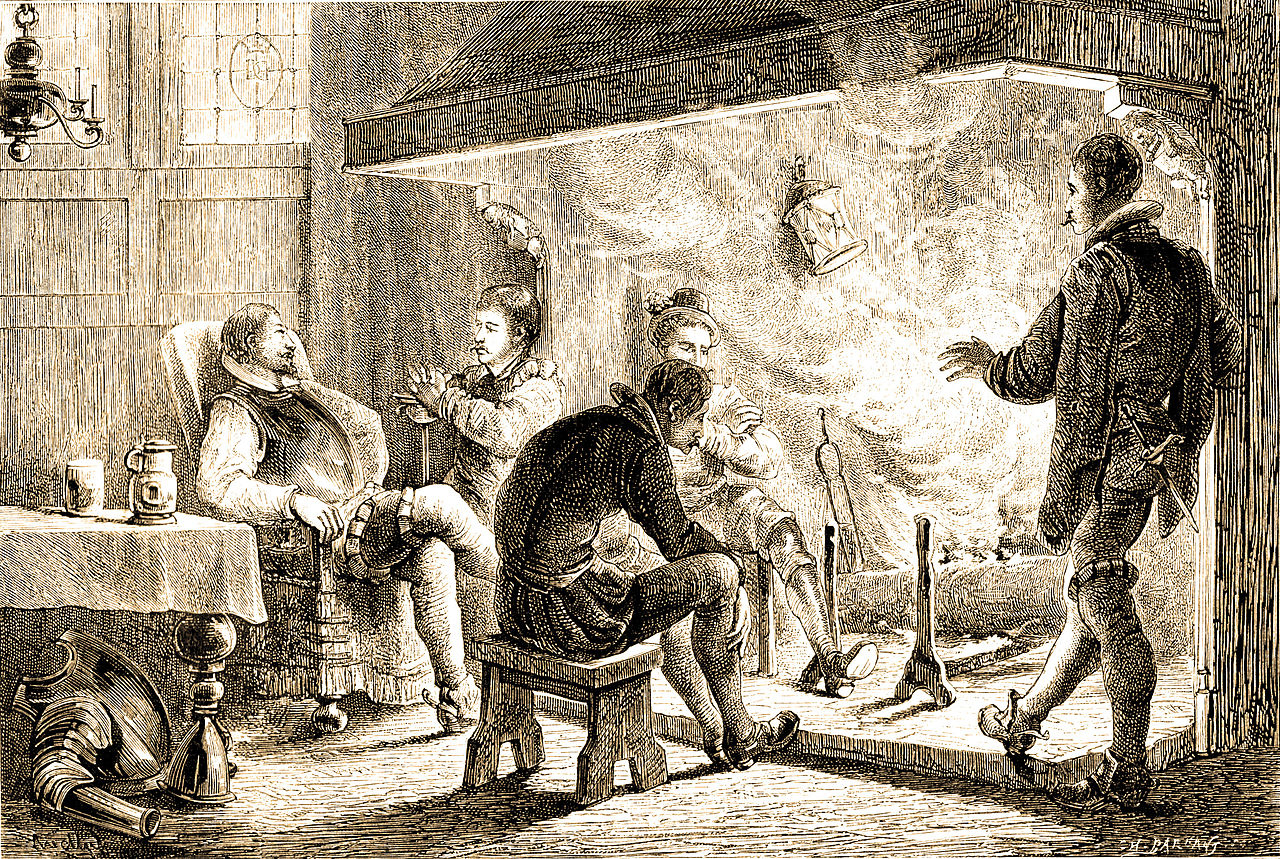


Come visit our interactive digital online catalog
Call us at: 212-461-0245 // 212-913-9588


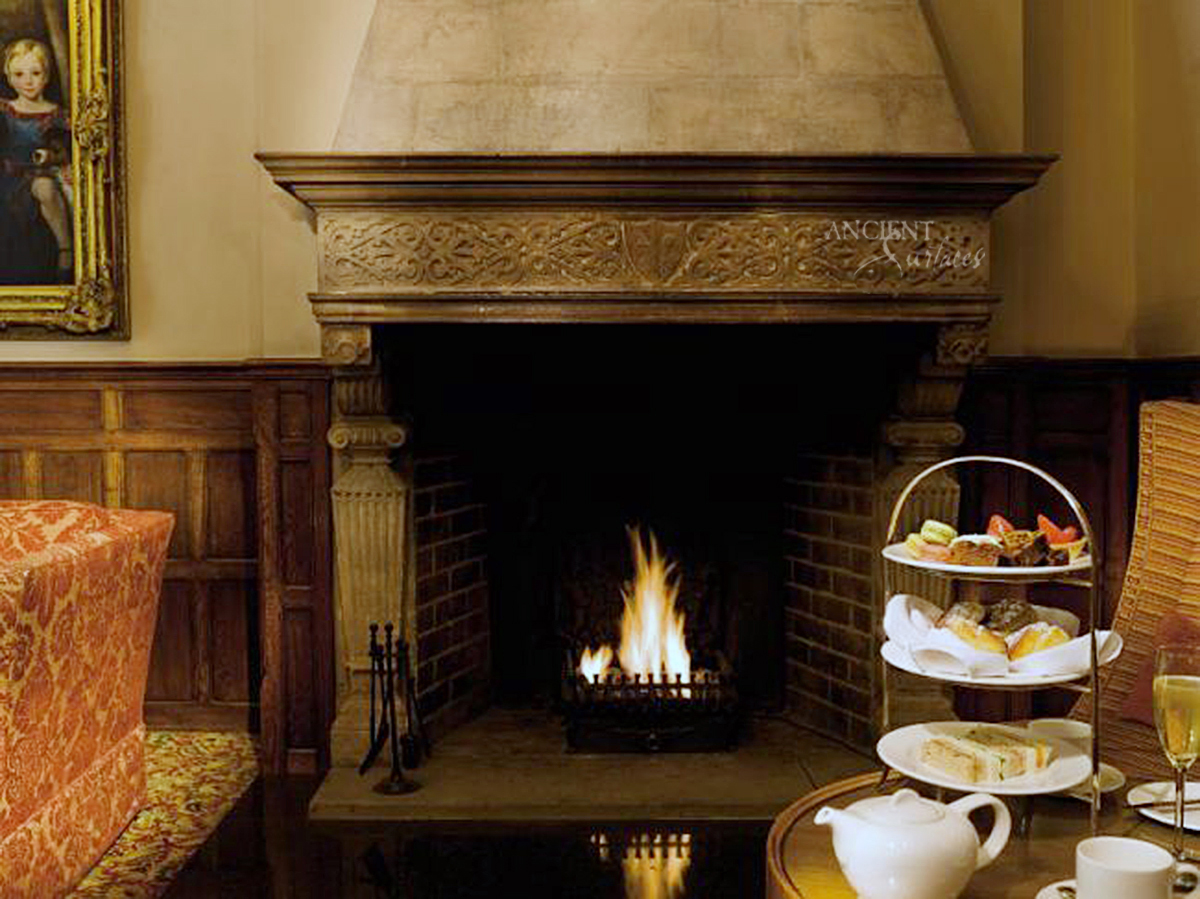
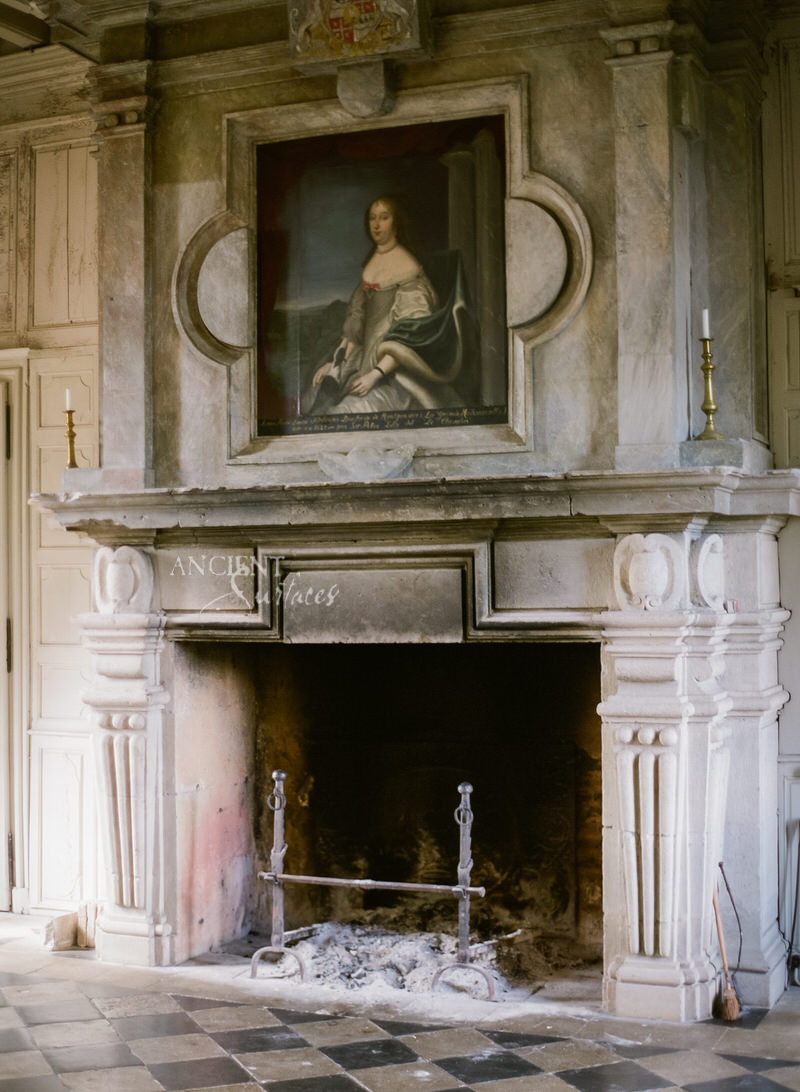
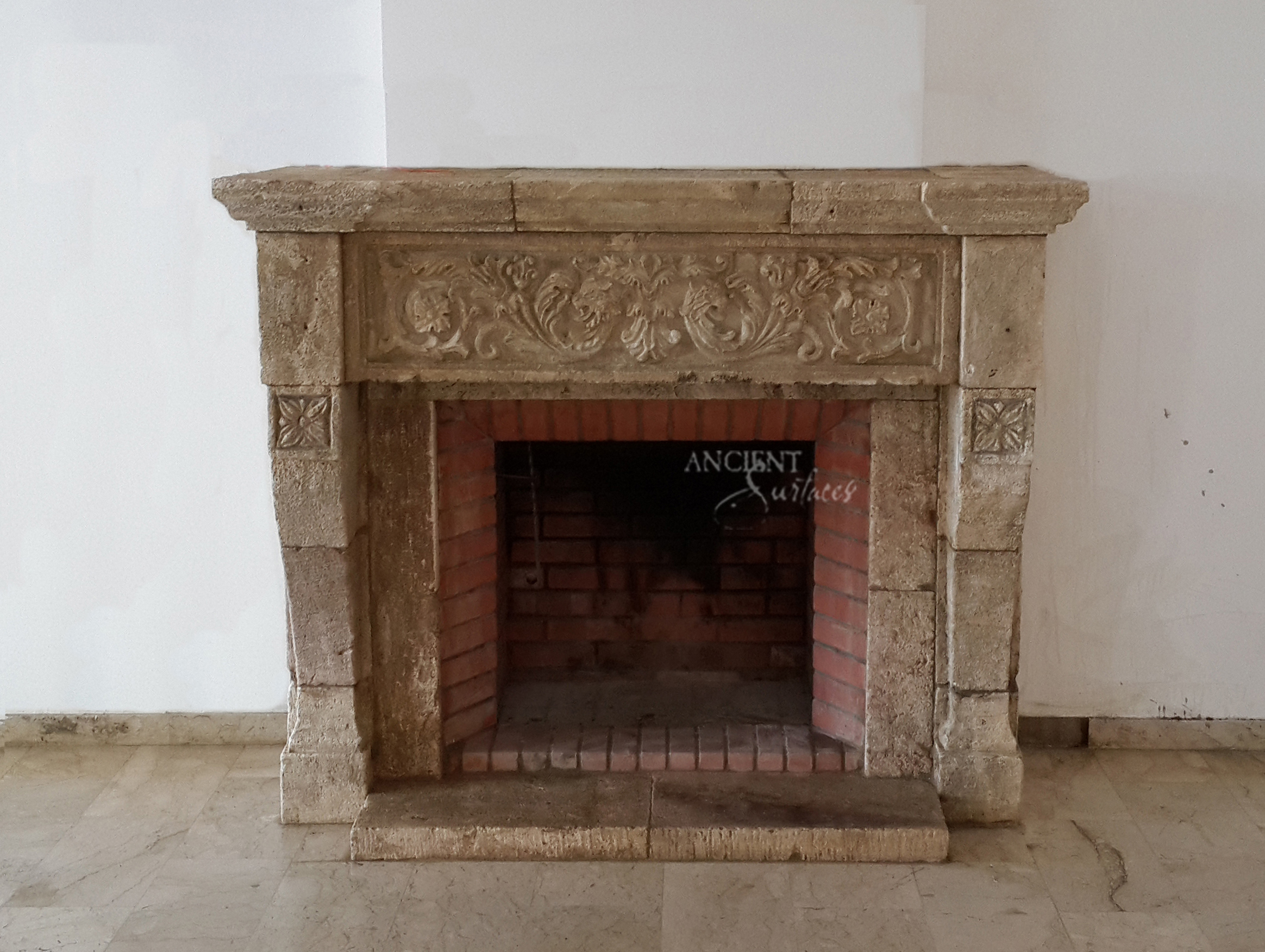
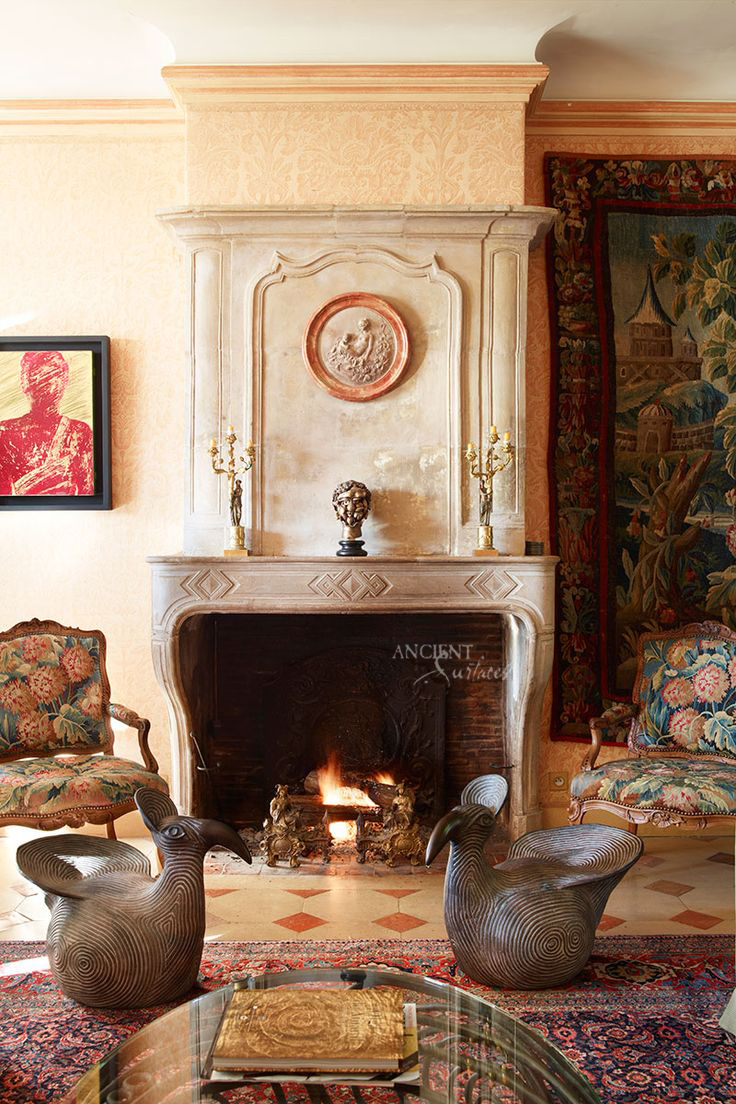


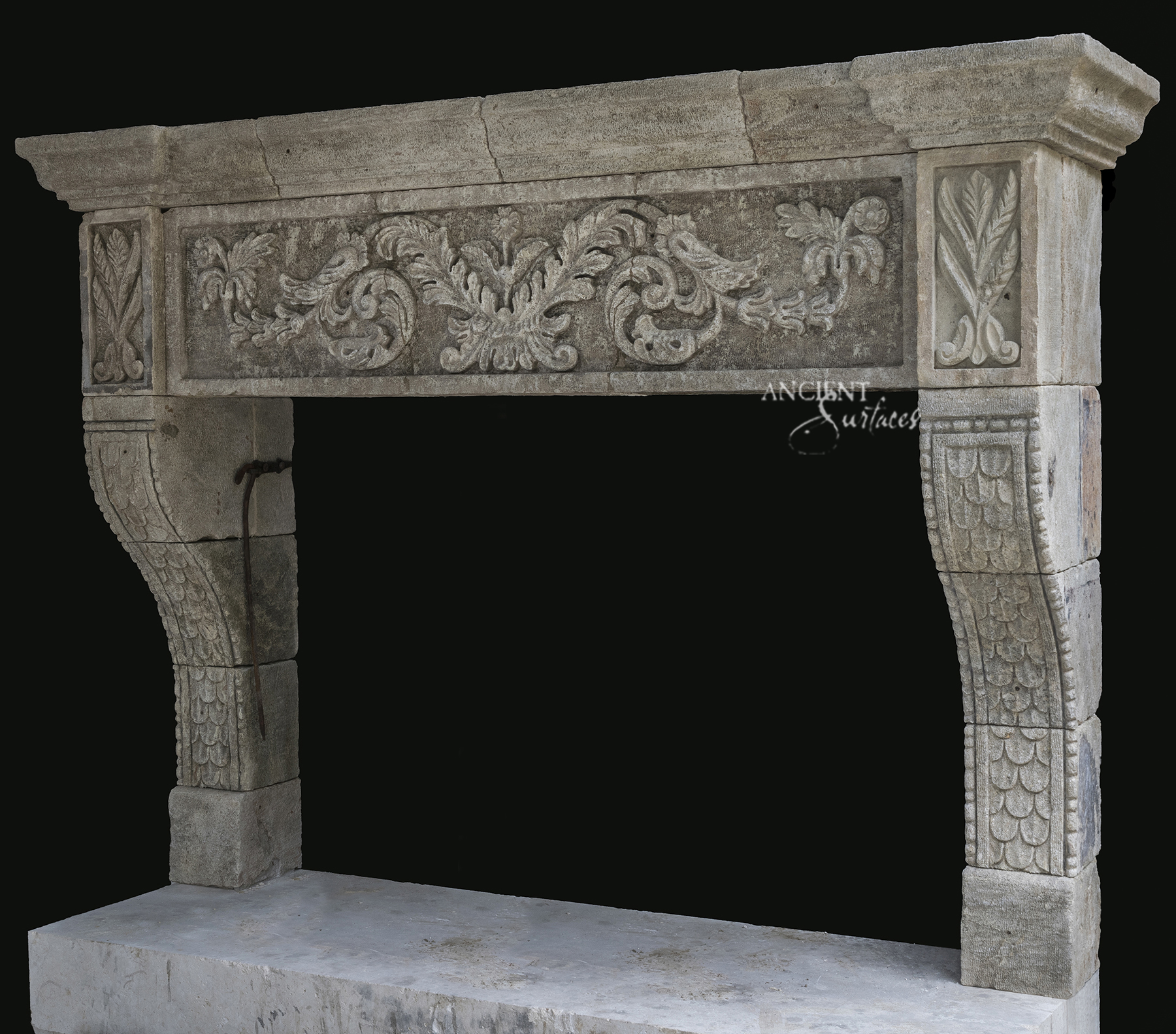
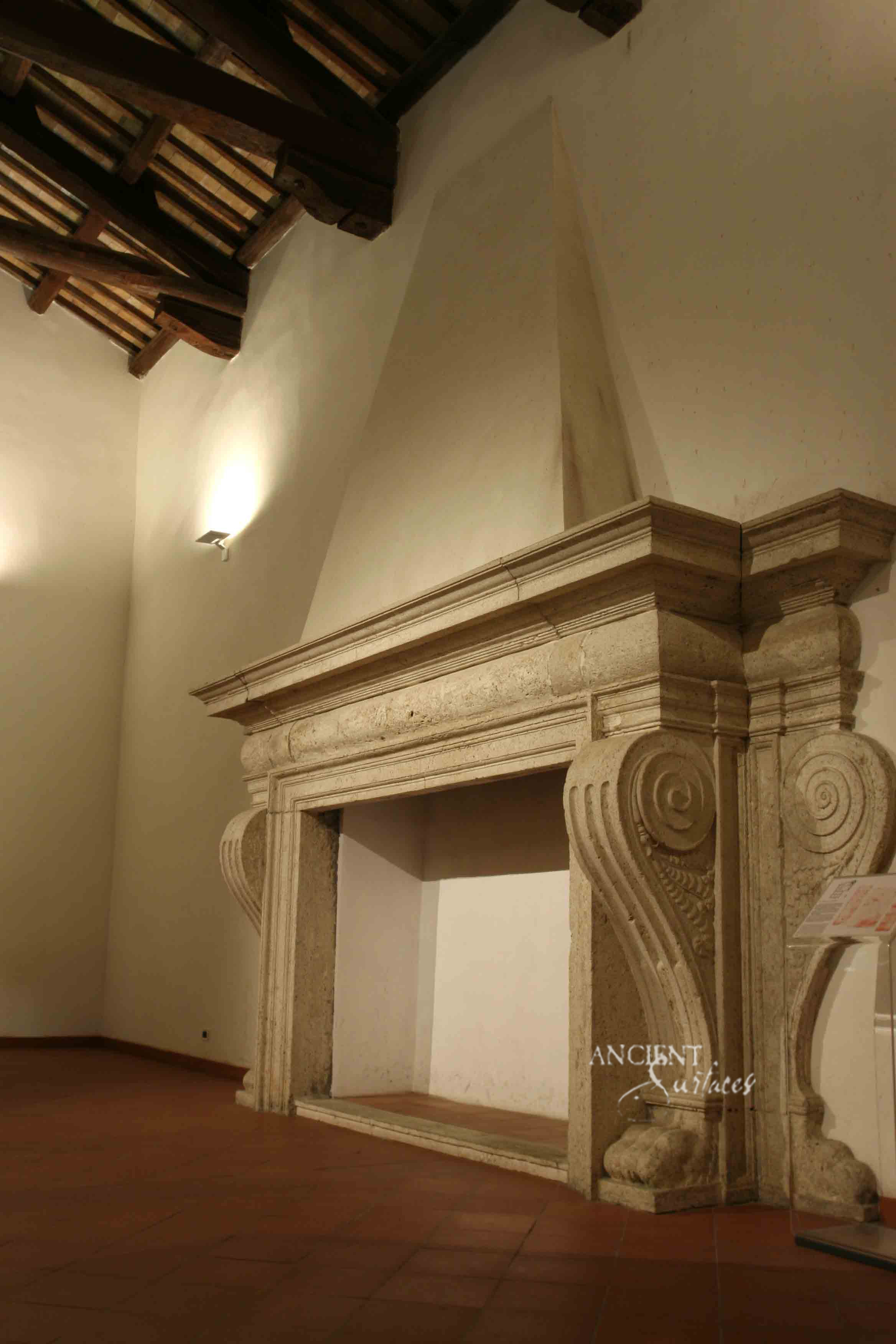
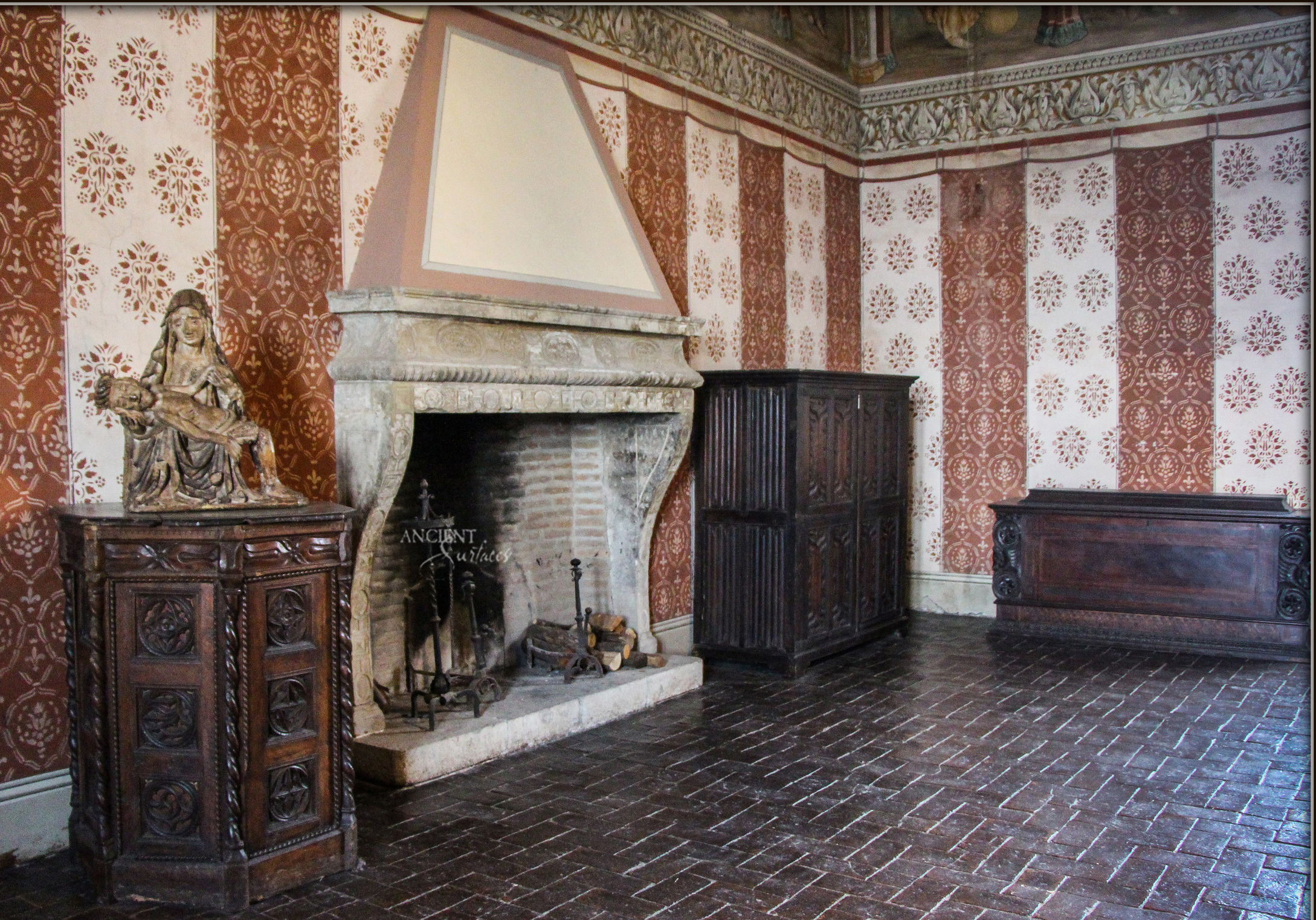


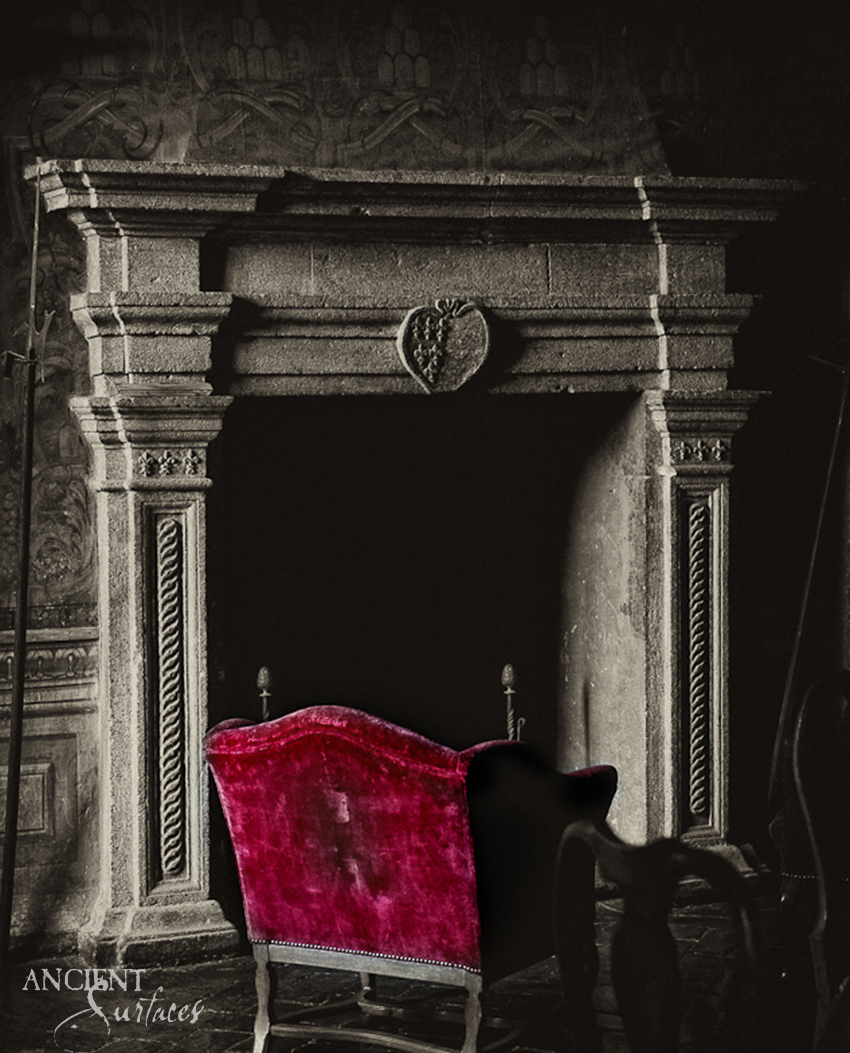
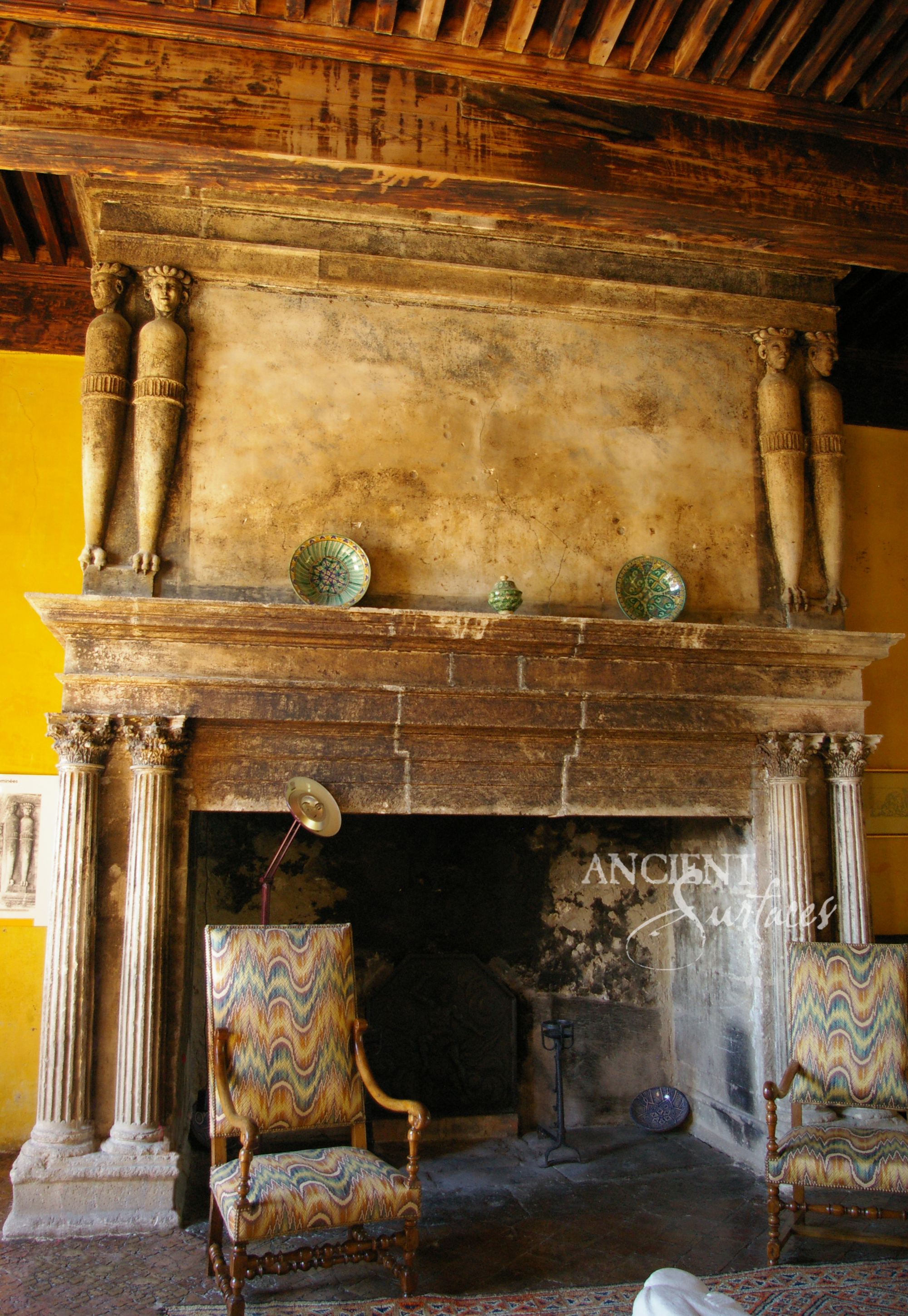
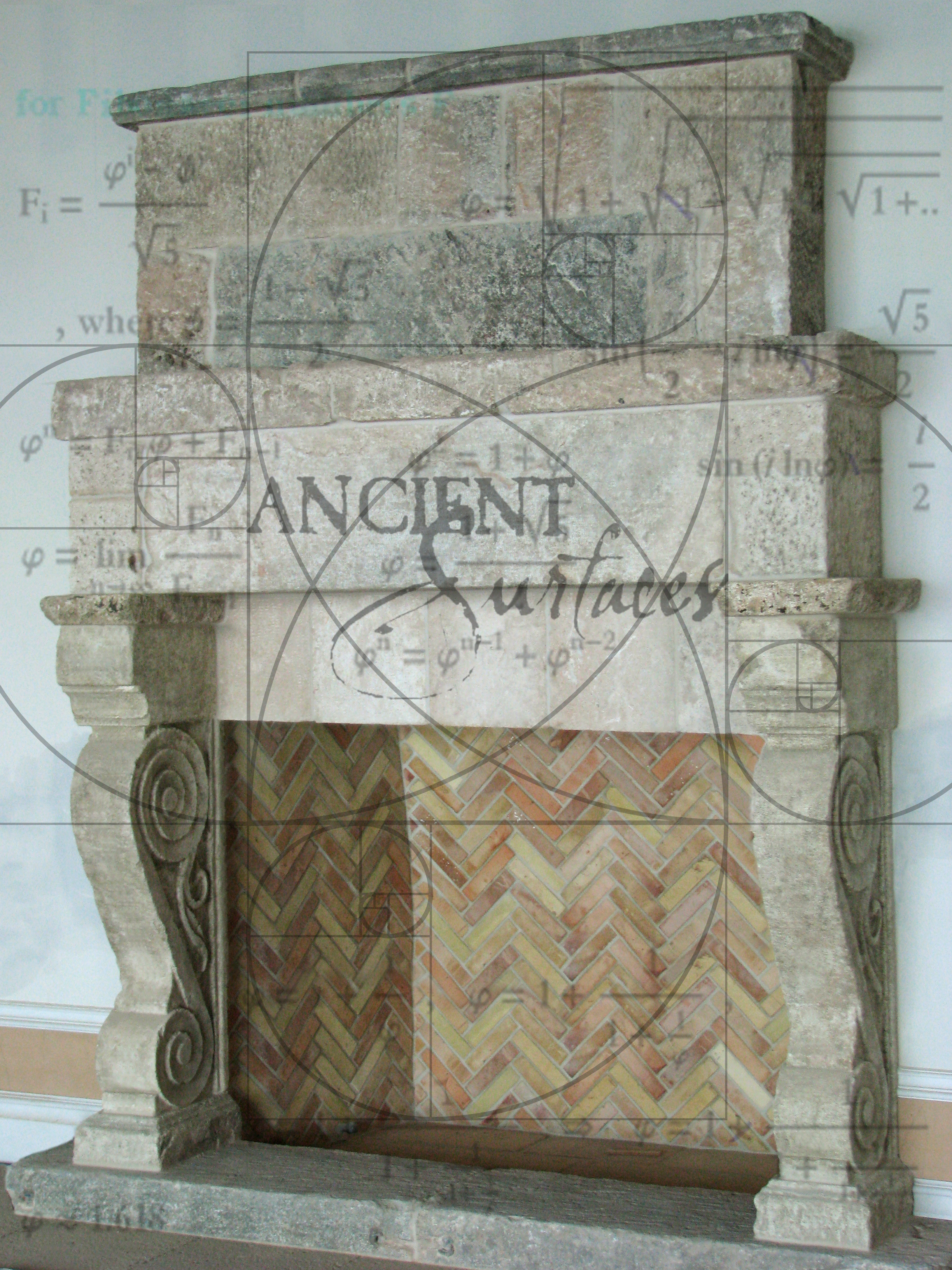
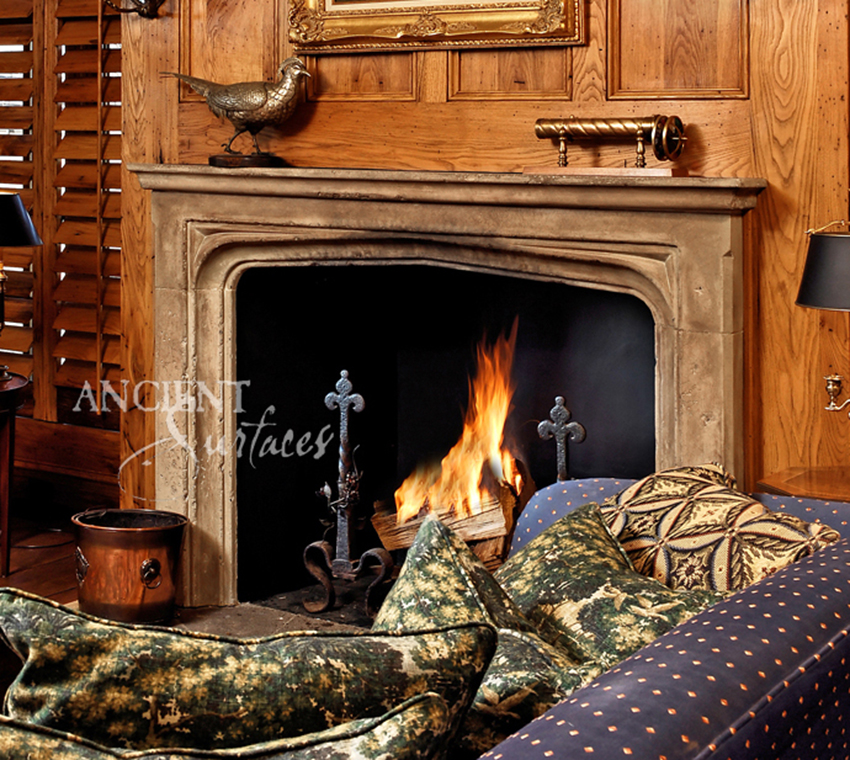
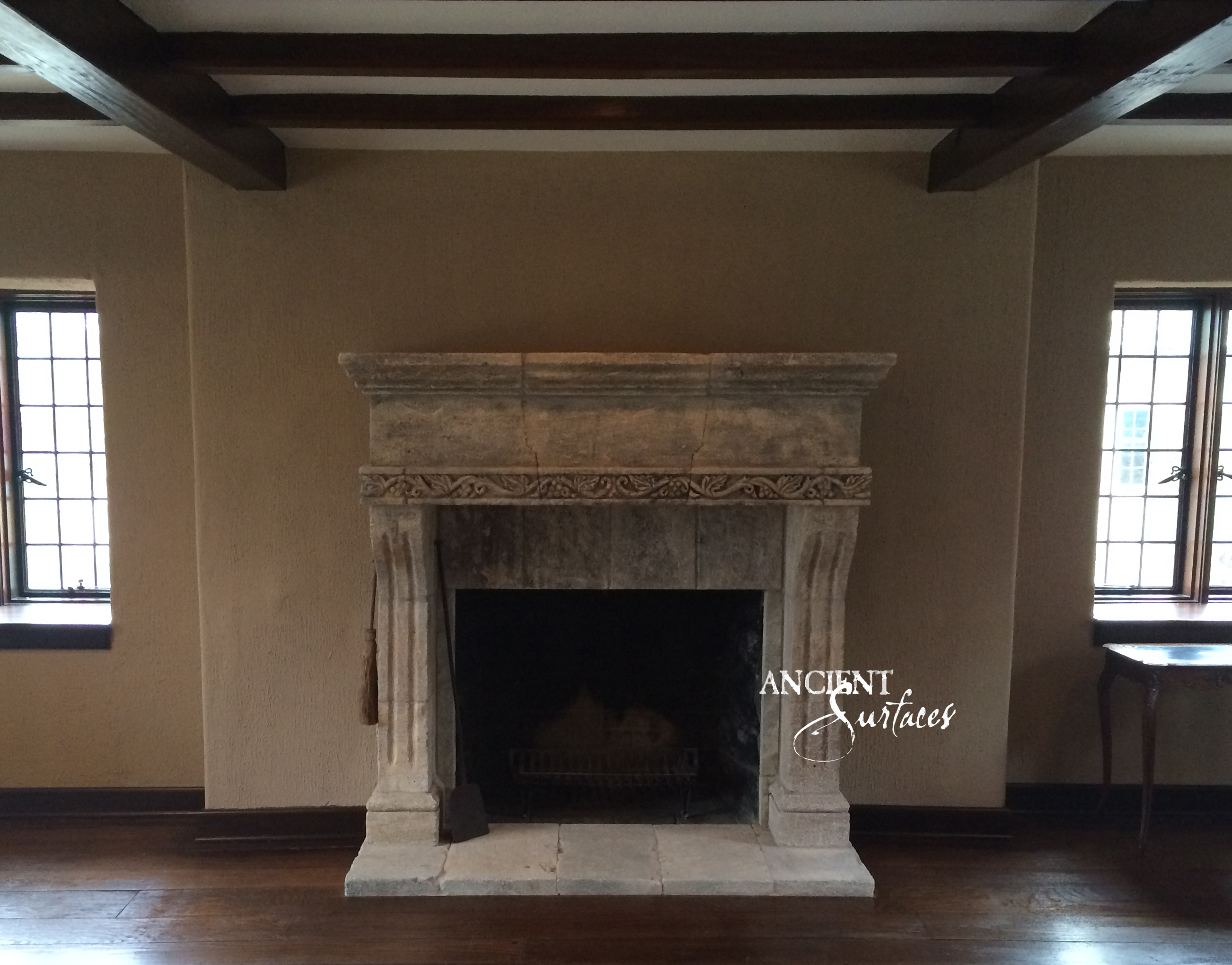
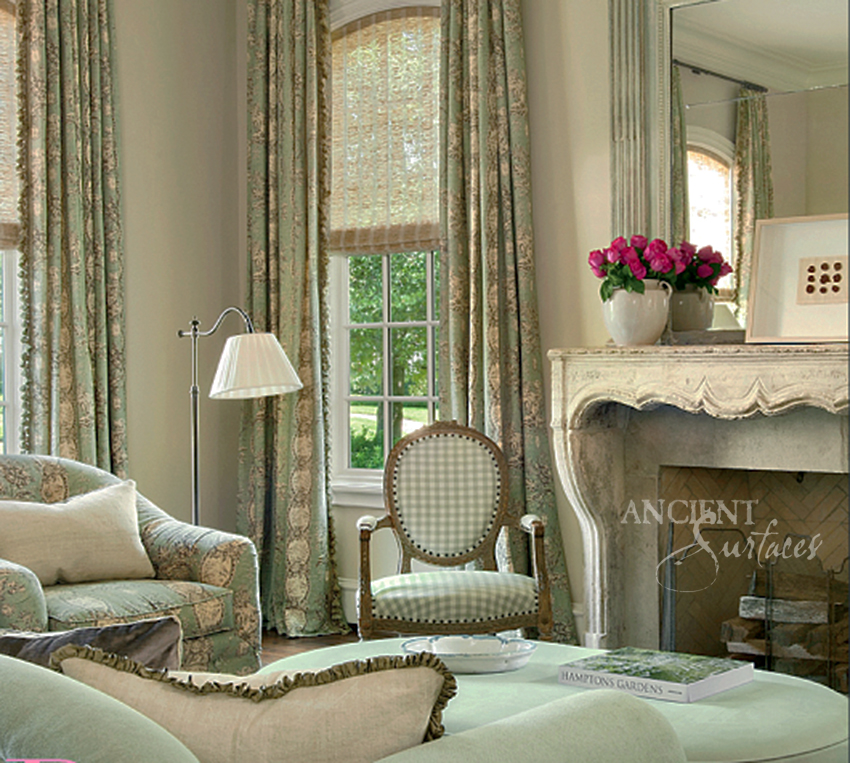

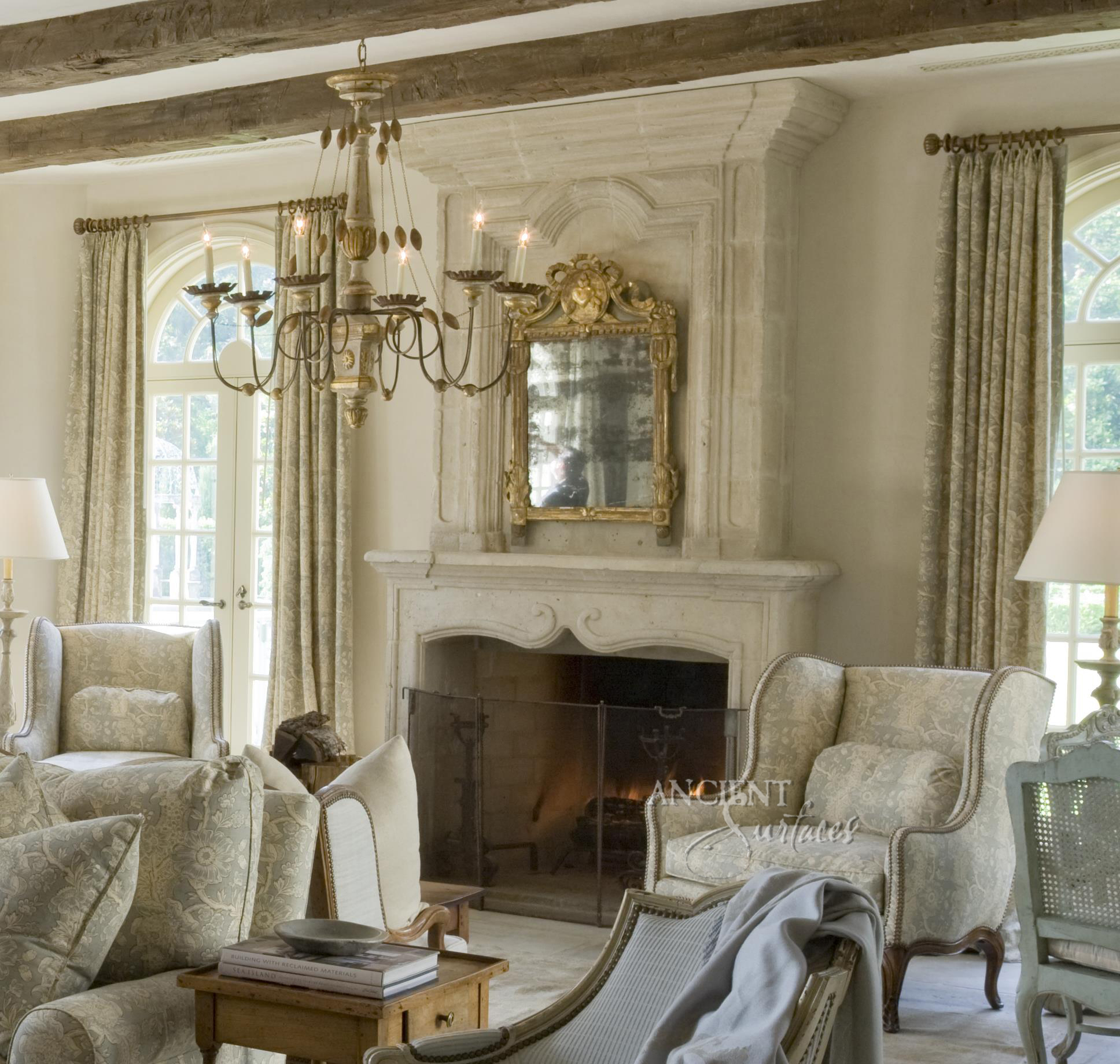
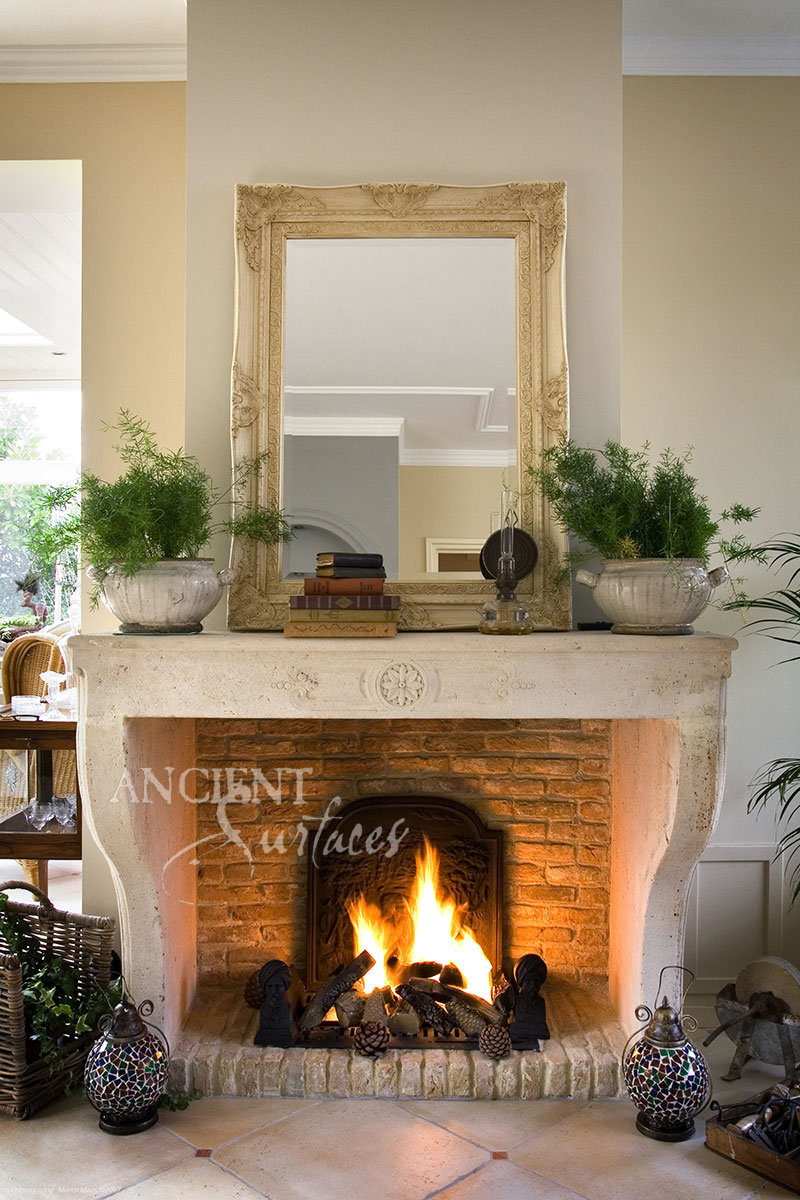
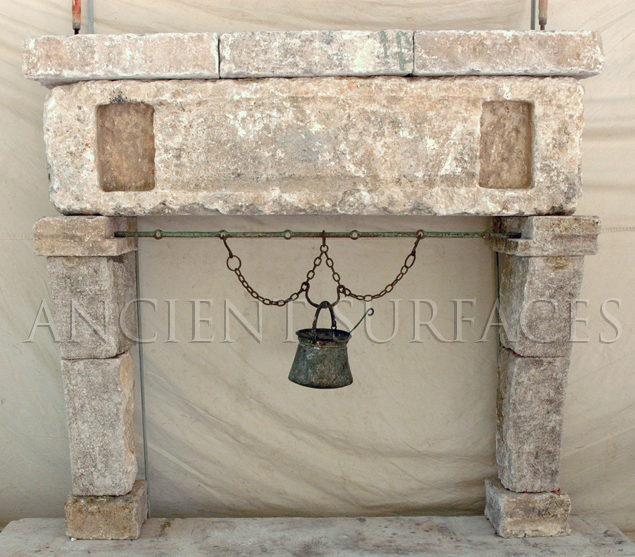
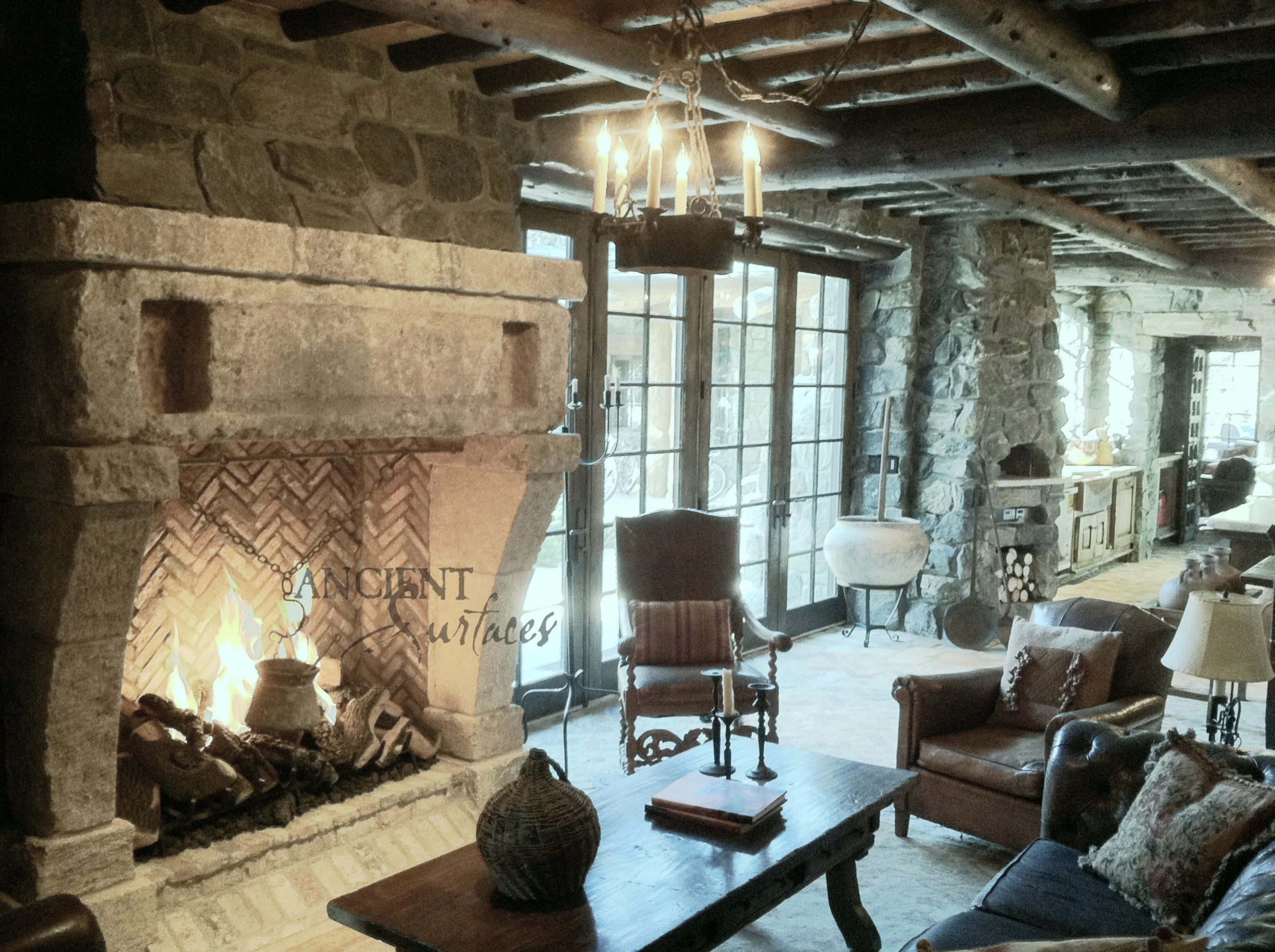
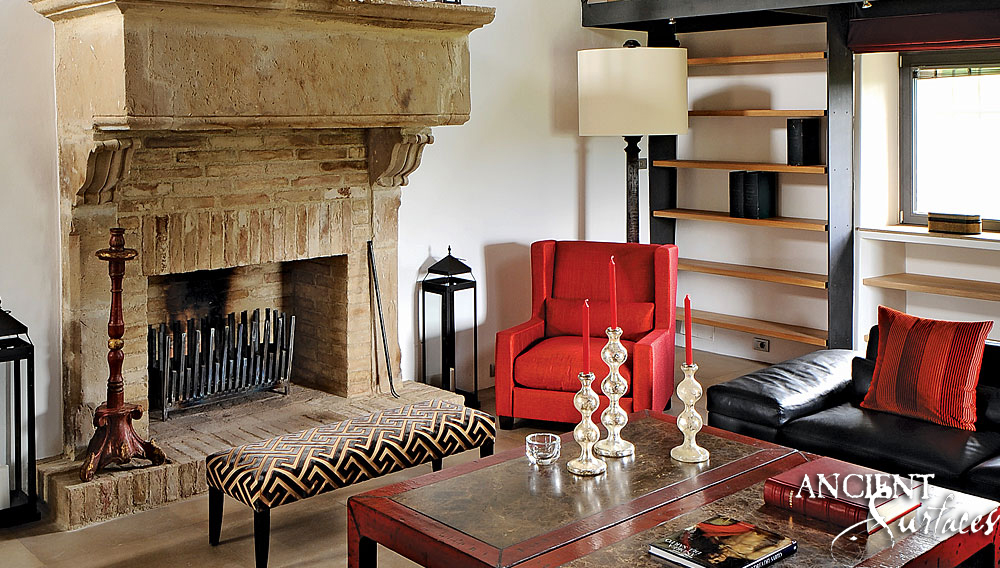
 Another 12 to 13th century Mantle piece that has been salvaged from this private ruined manor back in 1985 awaiting with its other sisters the loving home that will house her once more.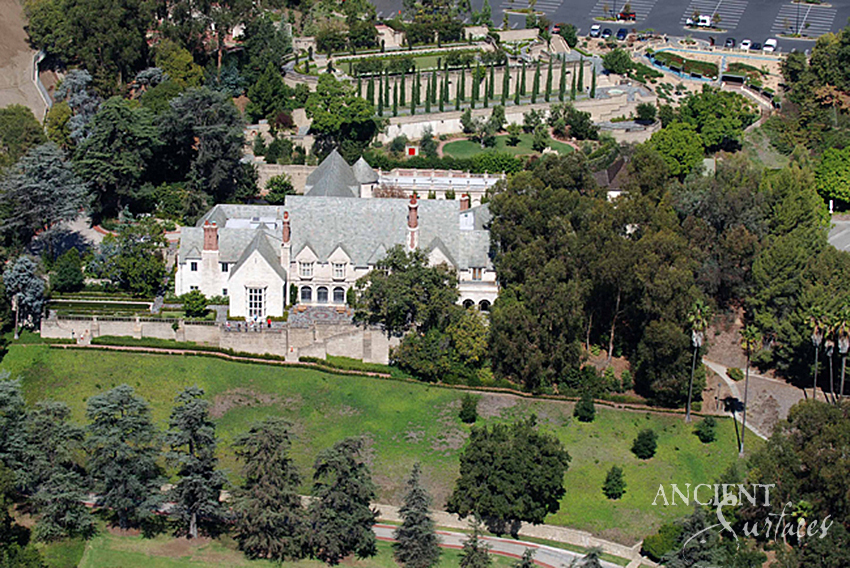
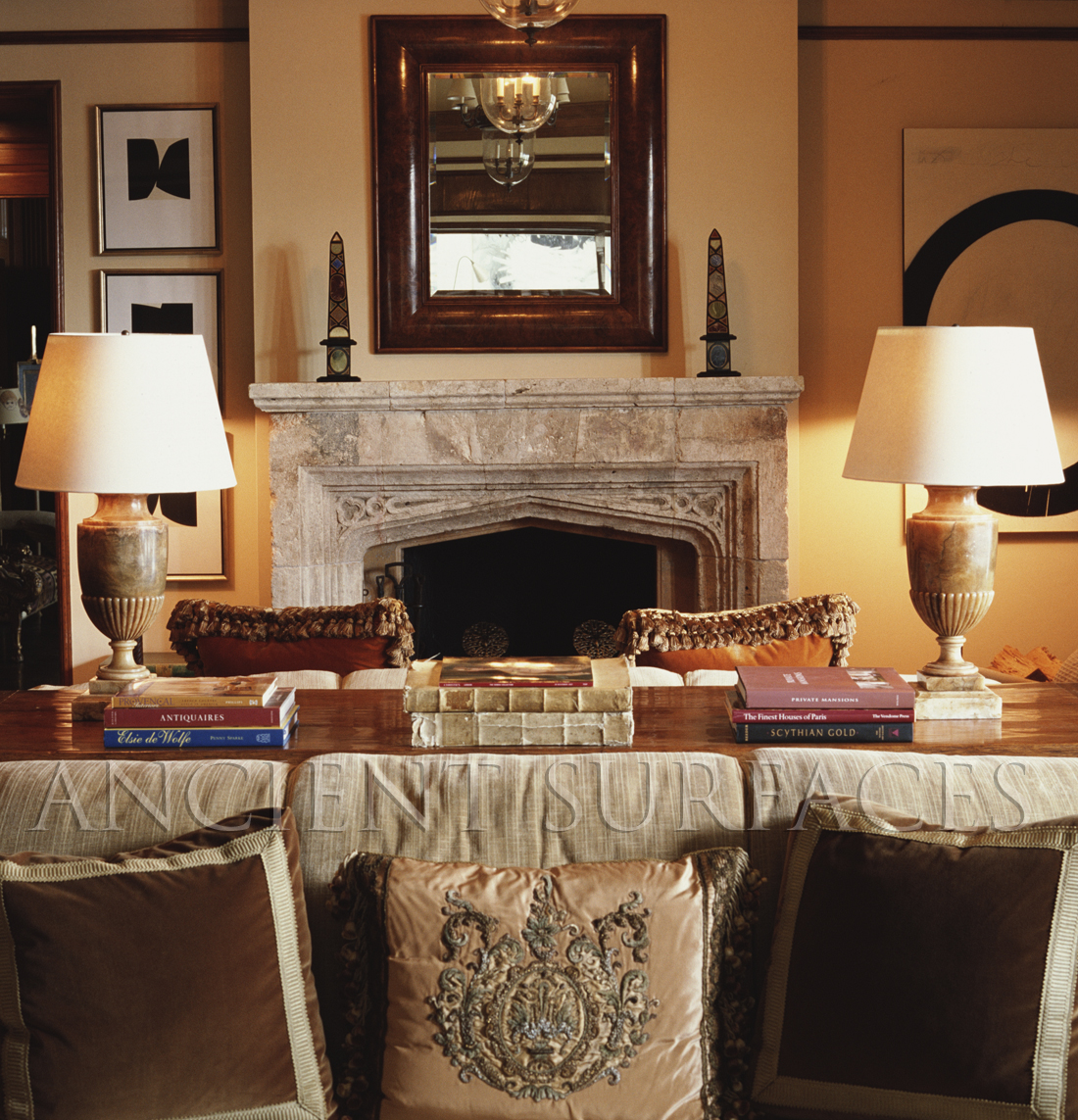
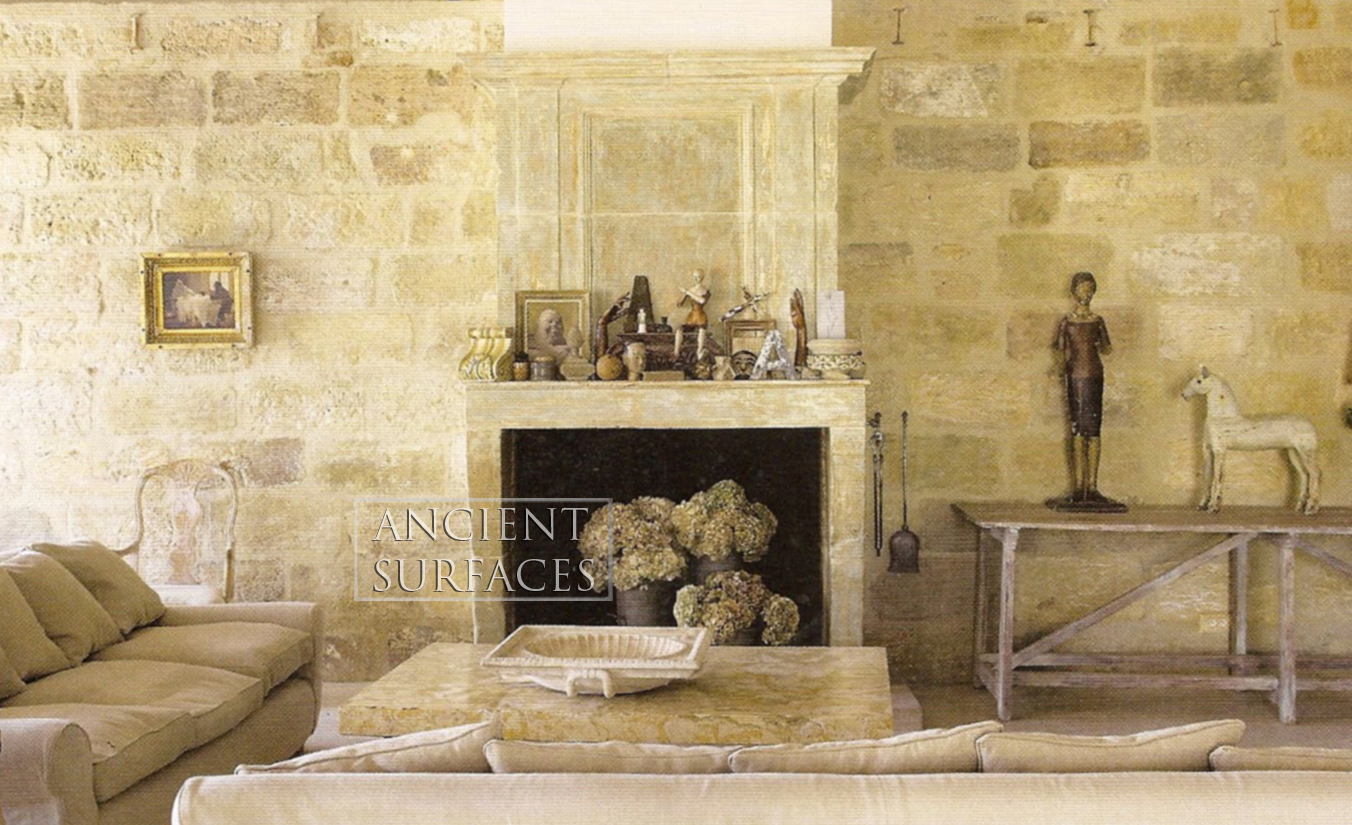
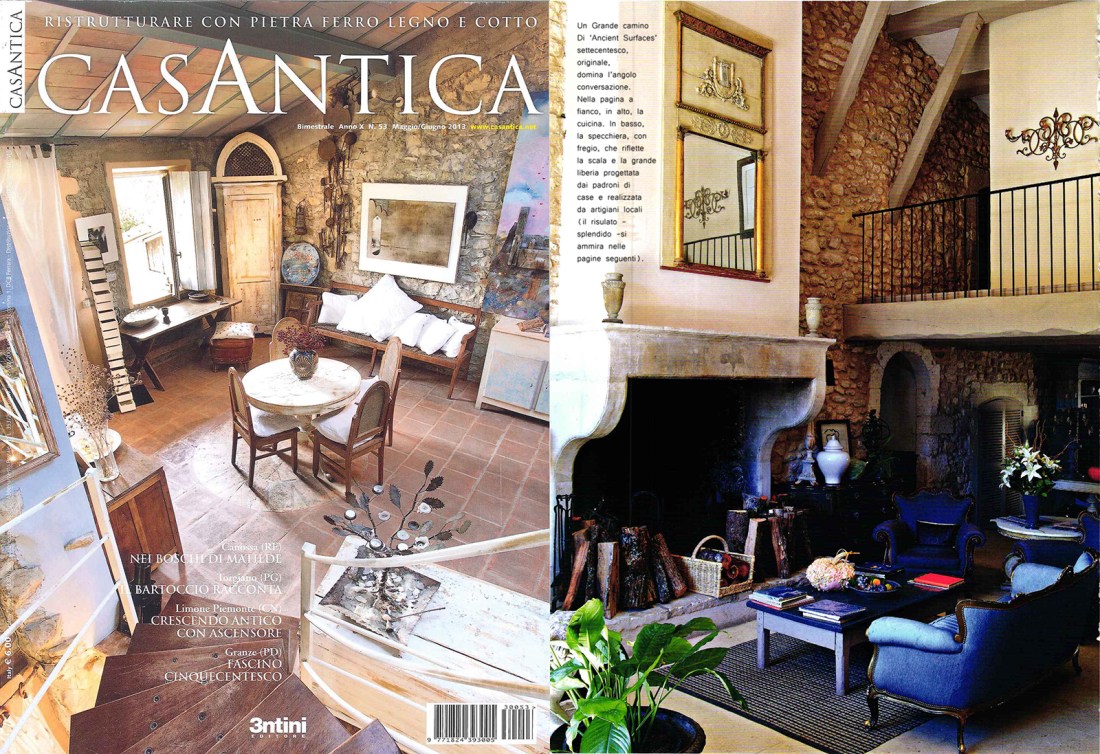

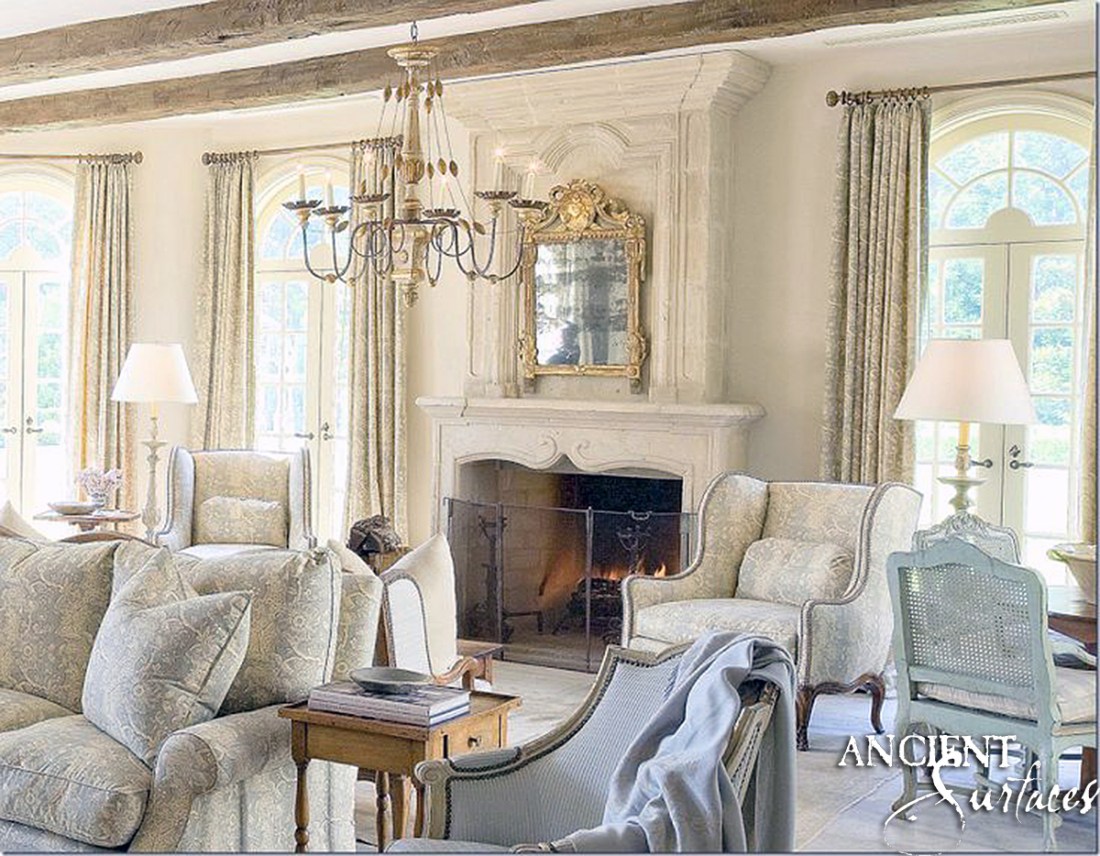
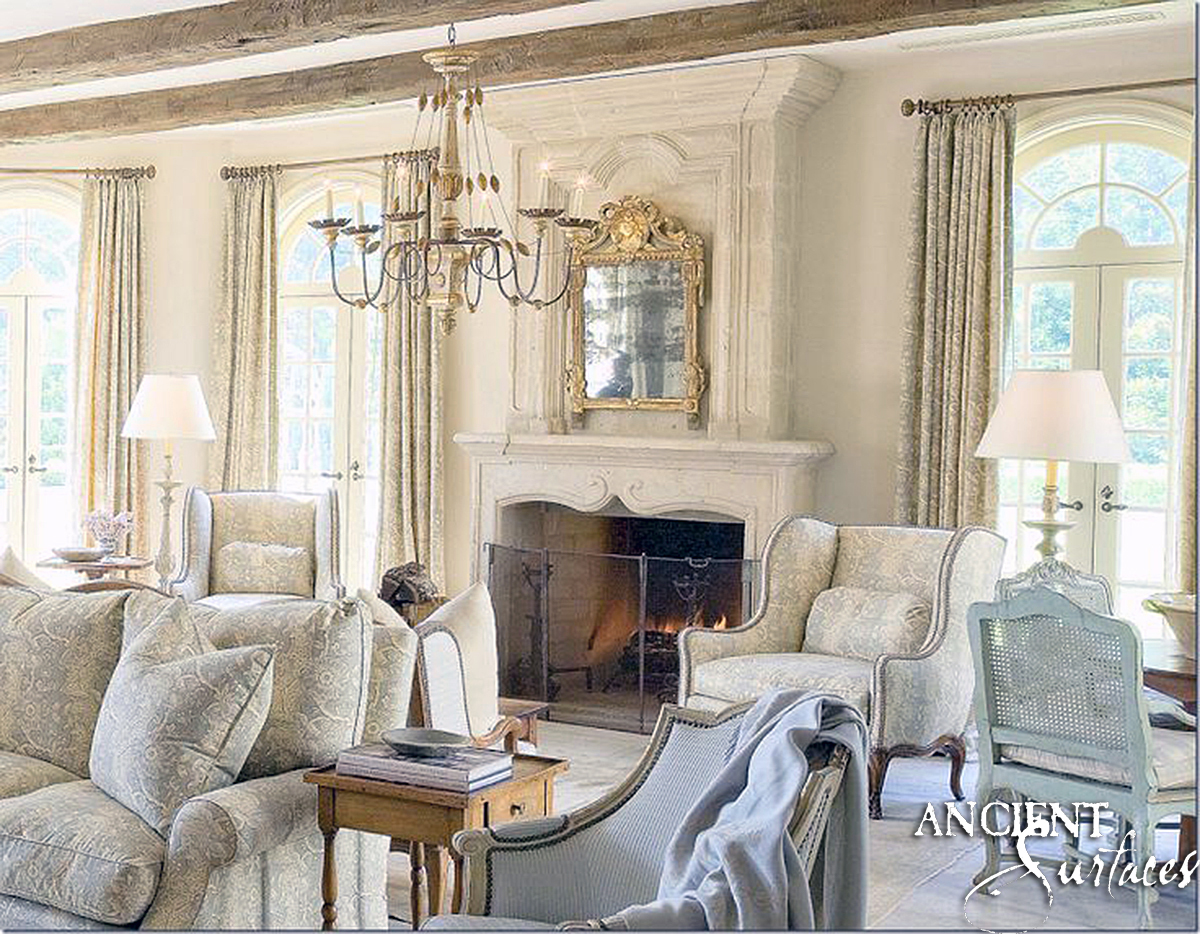
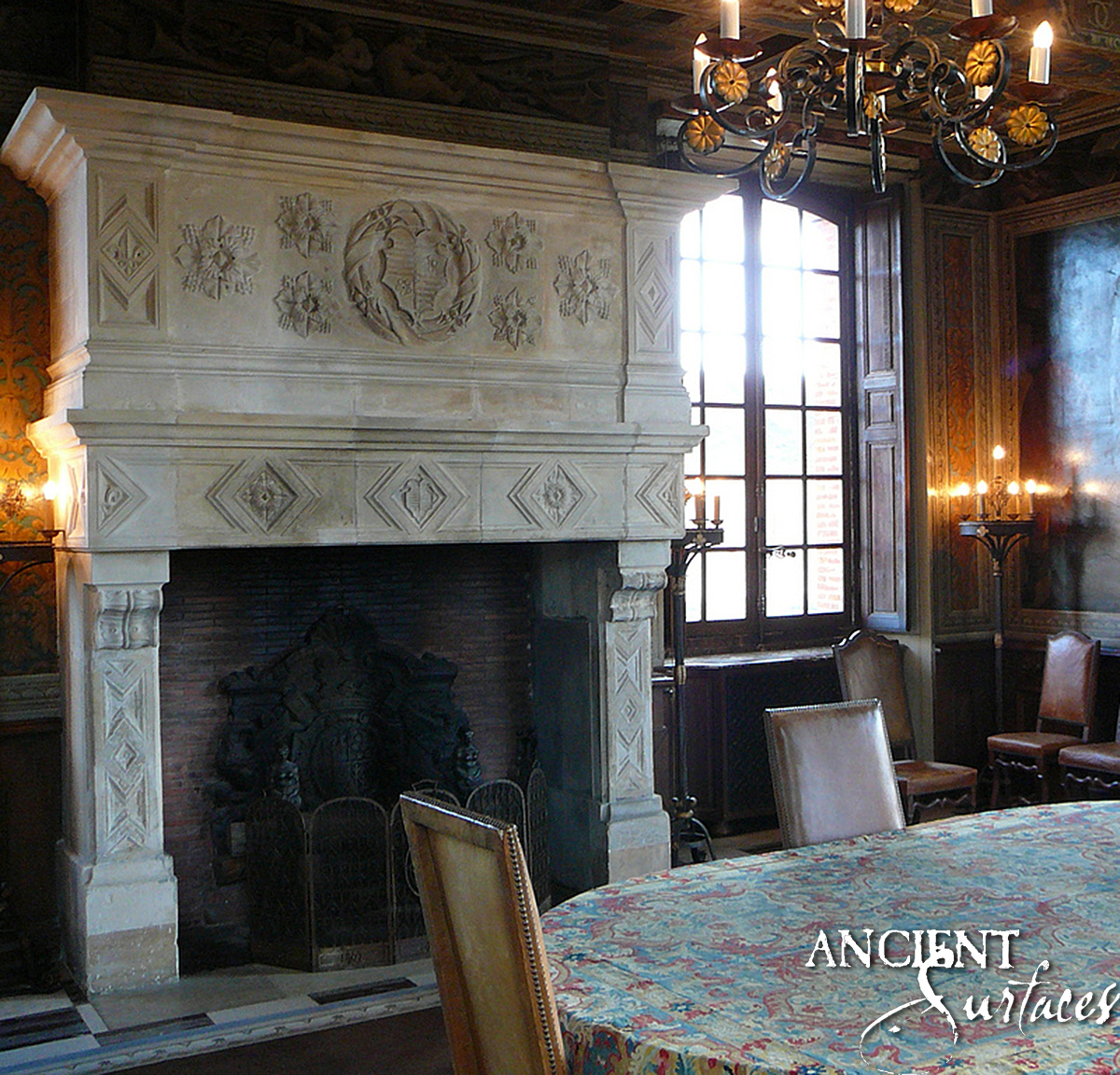
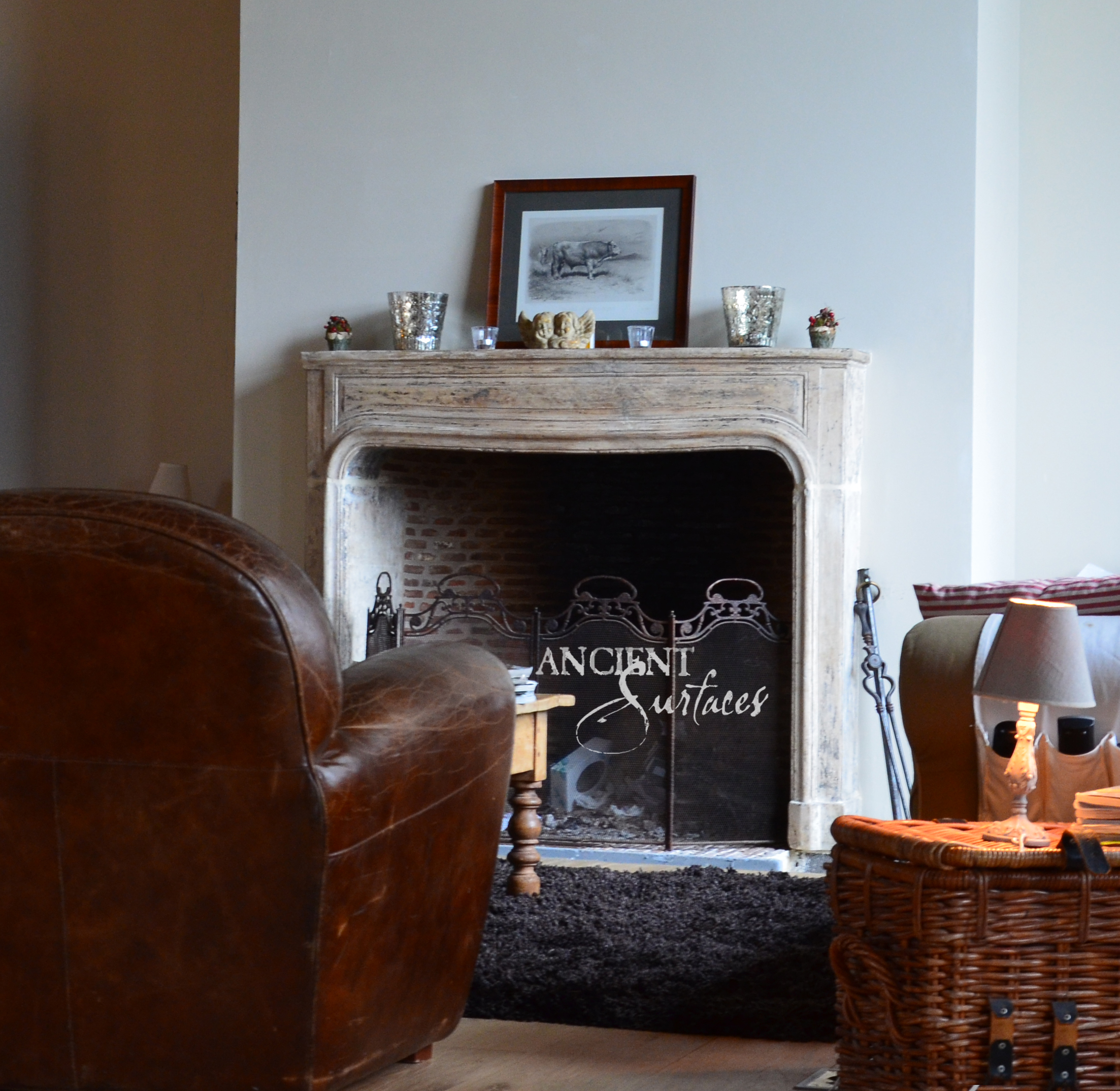
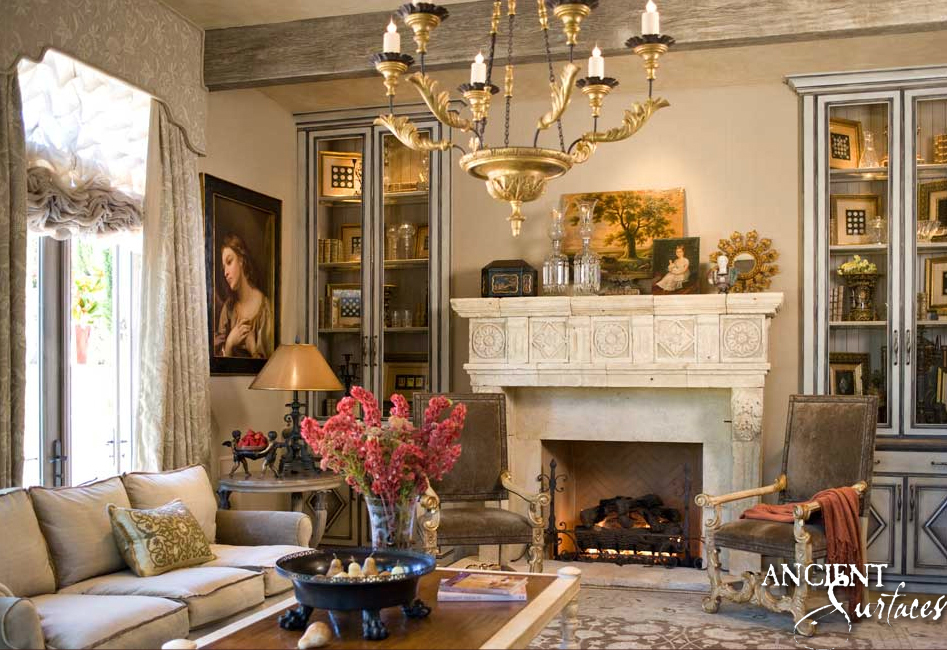
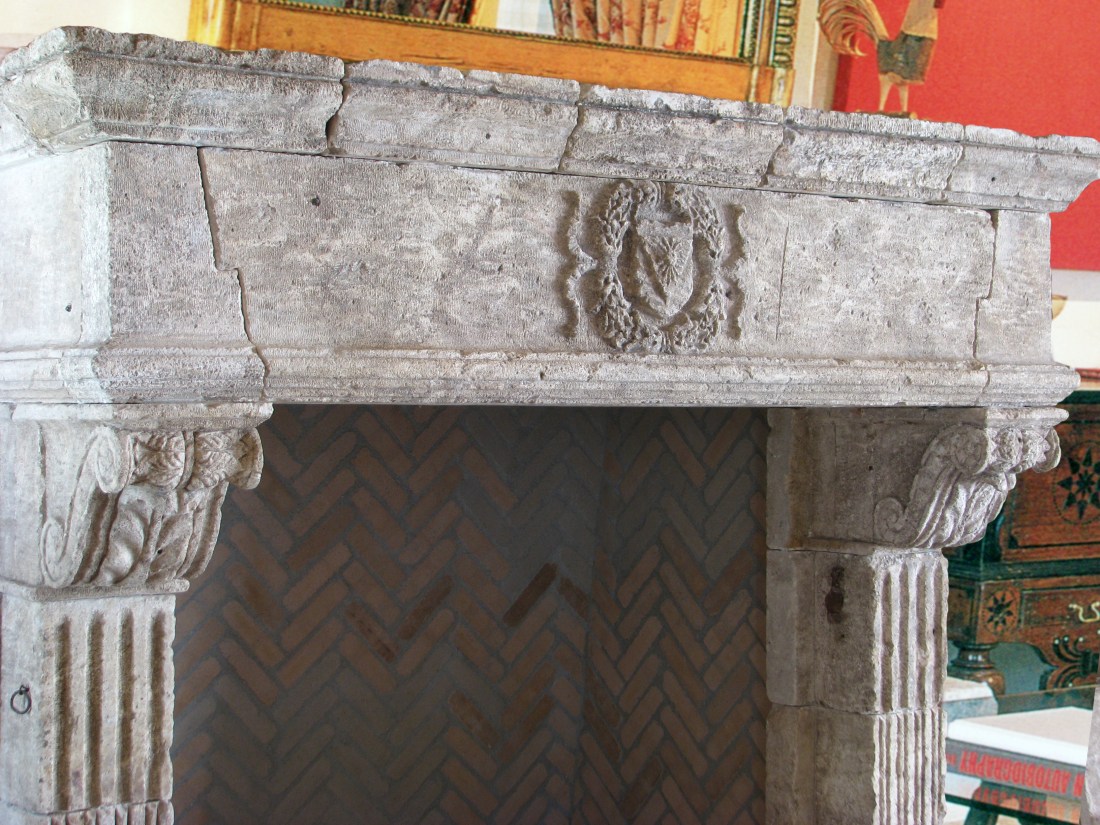 Ancient Surfaces’ wide gallery of fireplaces contains a trove of French and Italian antique limestone mantel fireplaces which is considered by many expert to be one of the world most significant in both size and importance.
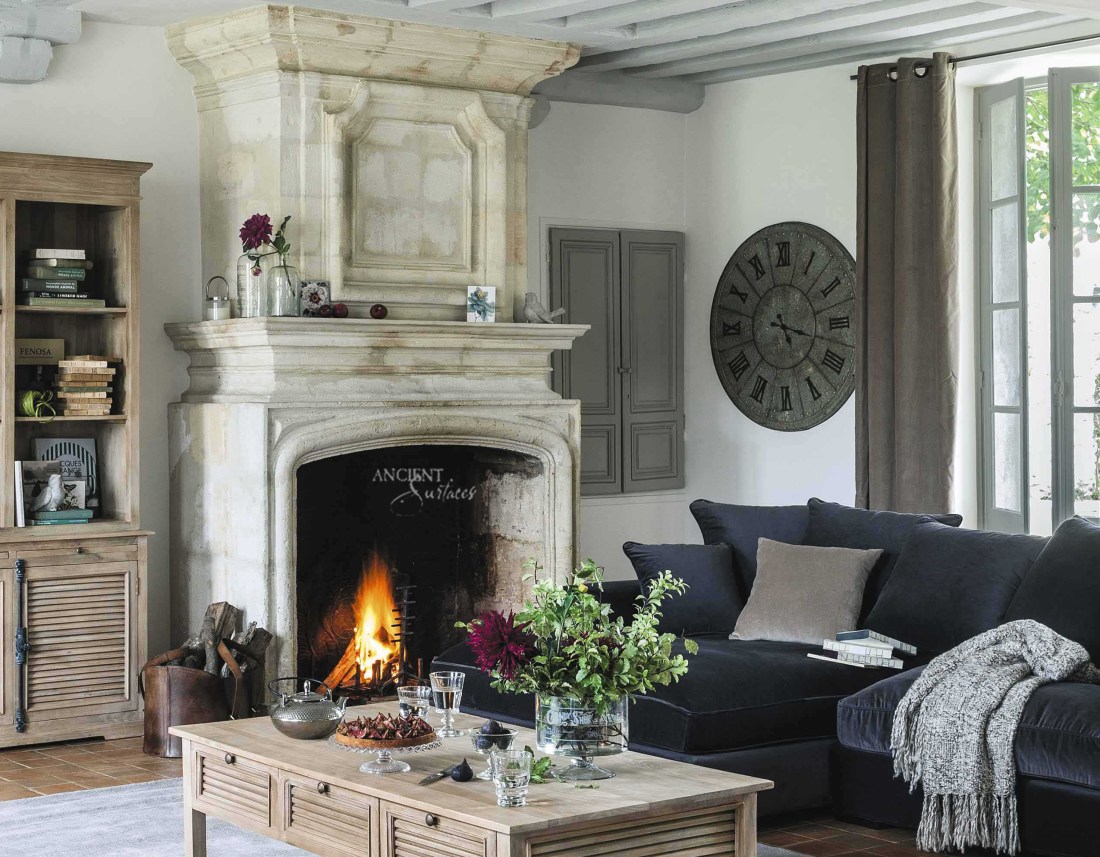
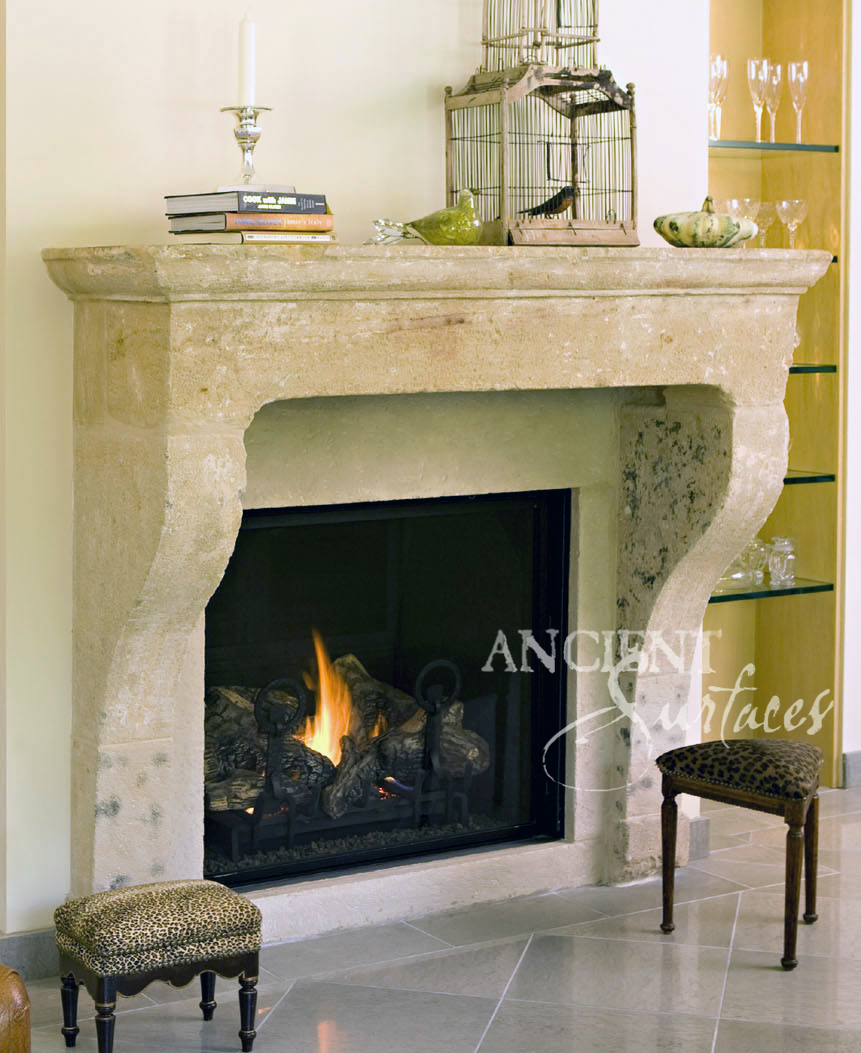
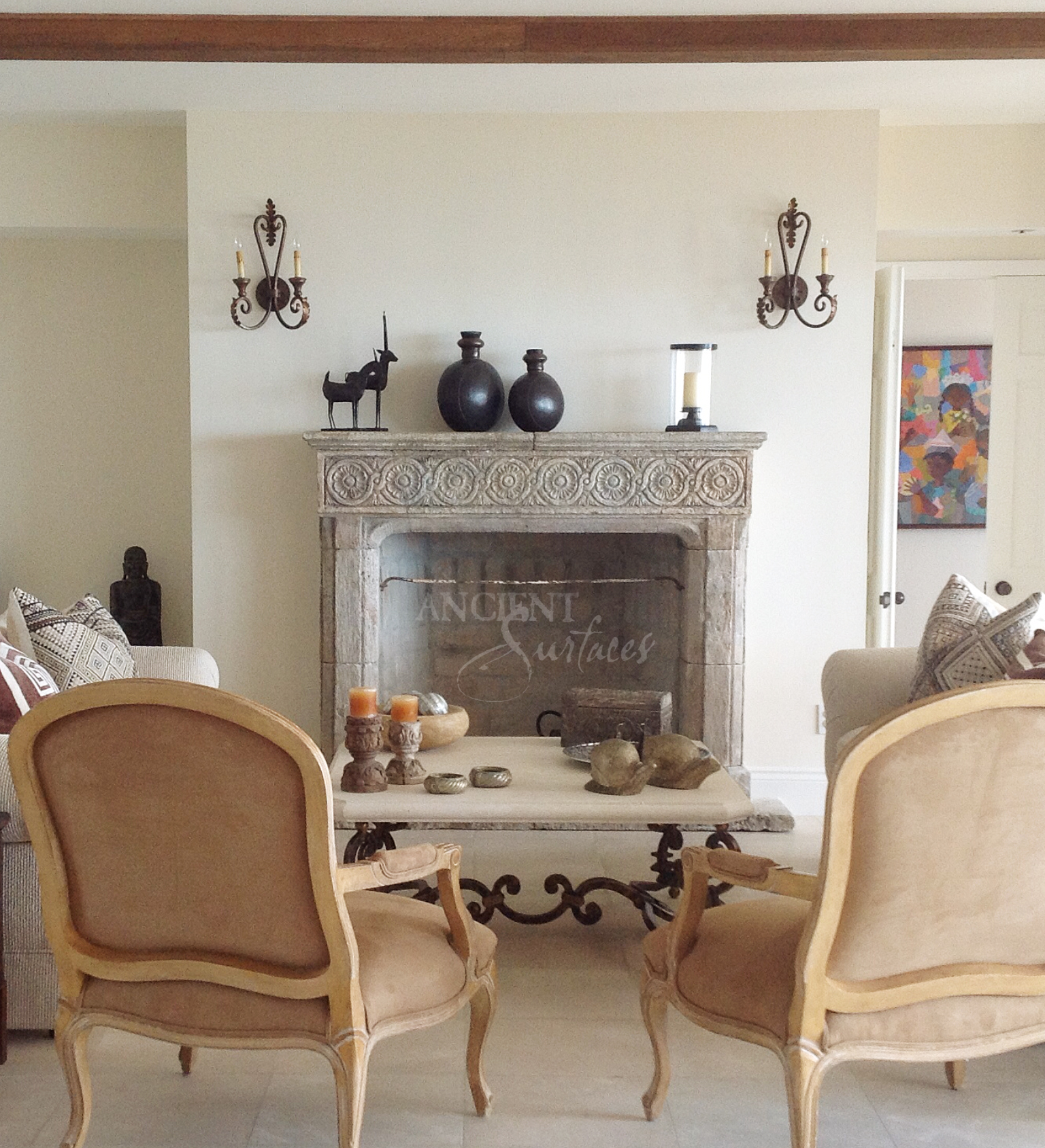
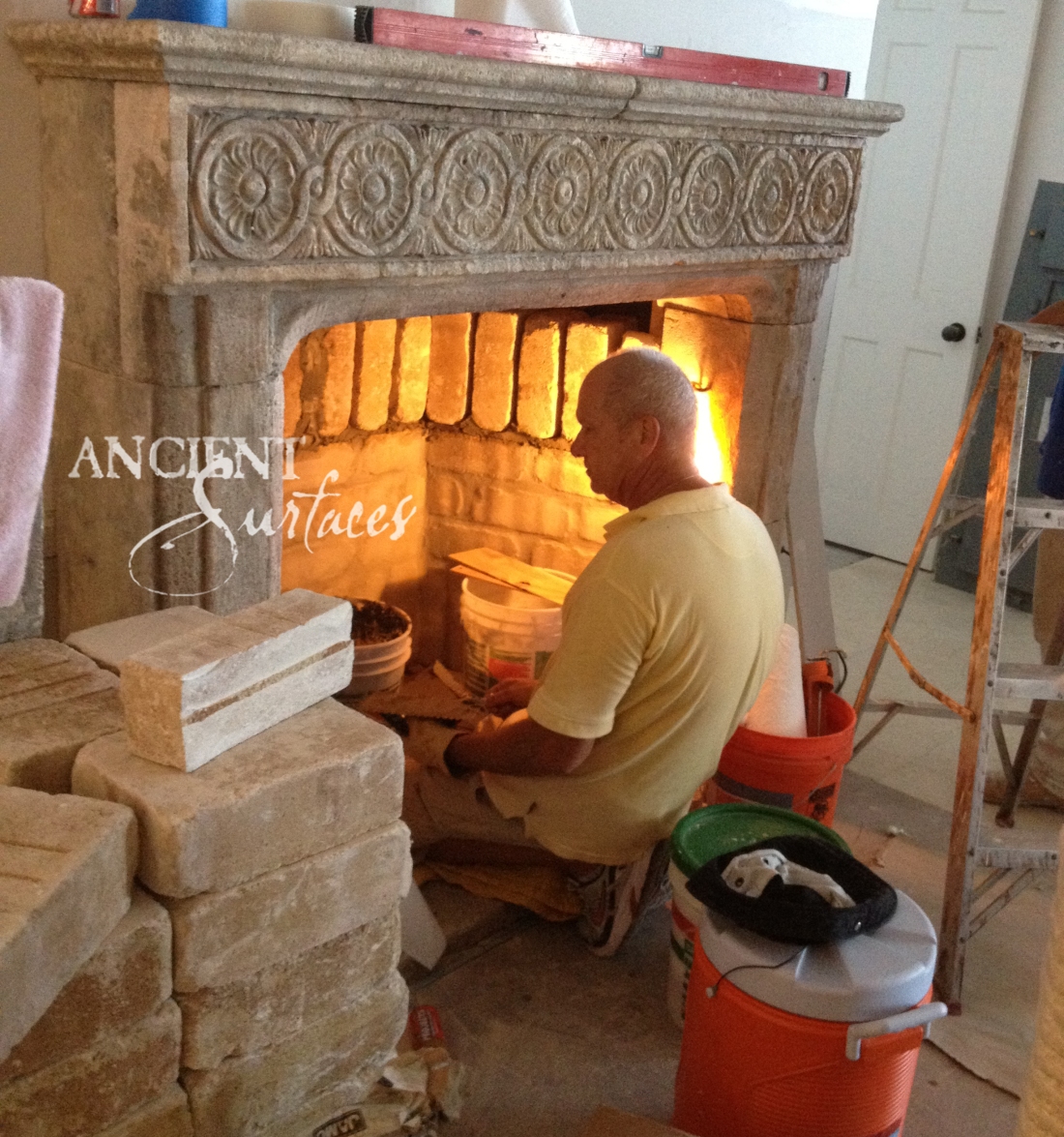
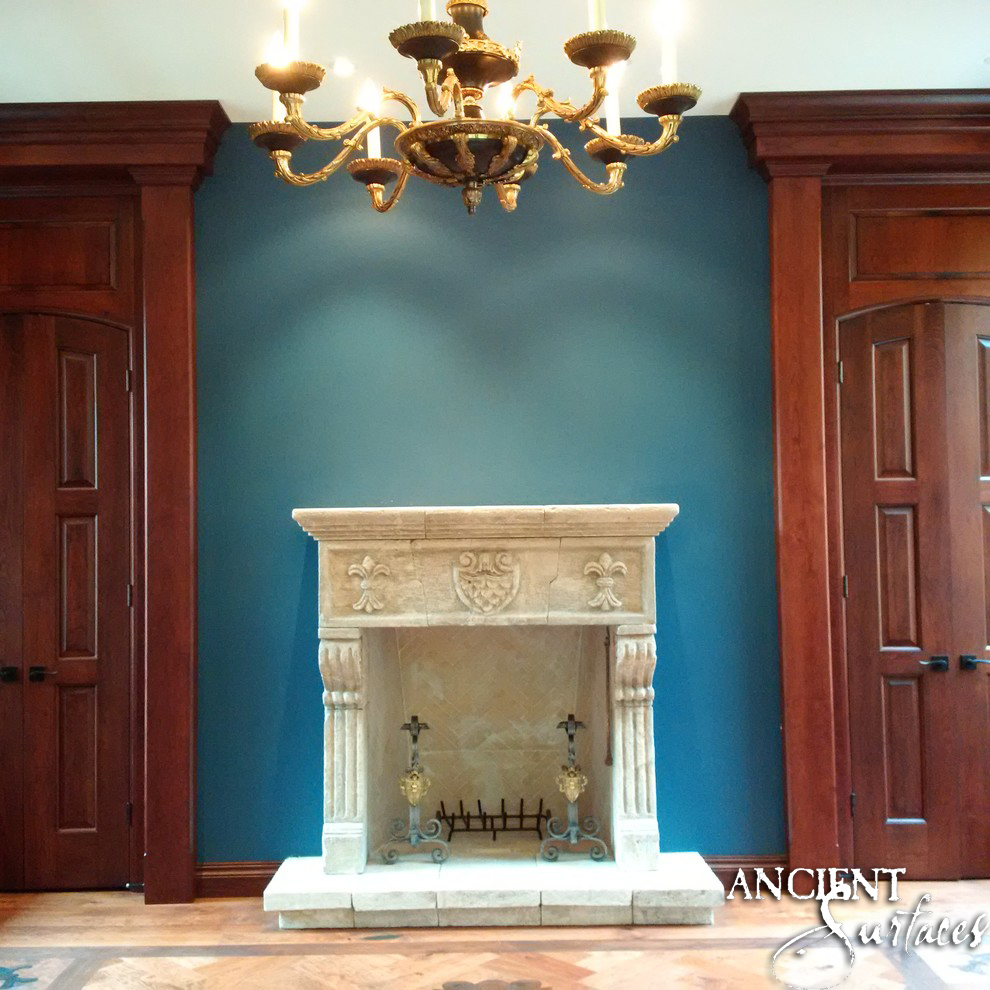
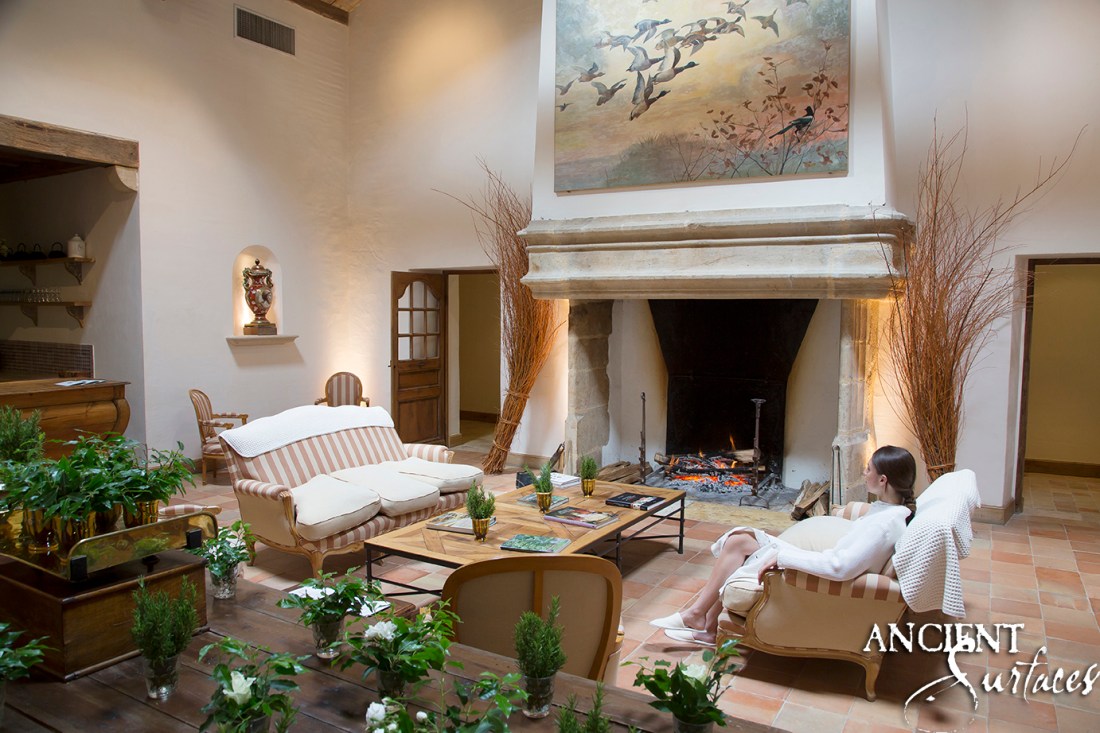 Here’s an antique limestone mantle above was salvaged from France and was raised by a hearth to perfectly fit an existing fireplace box in California.


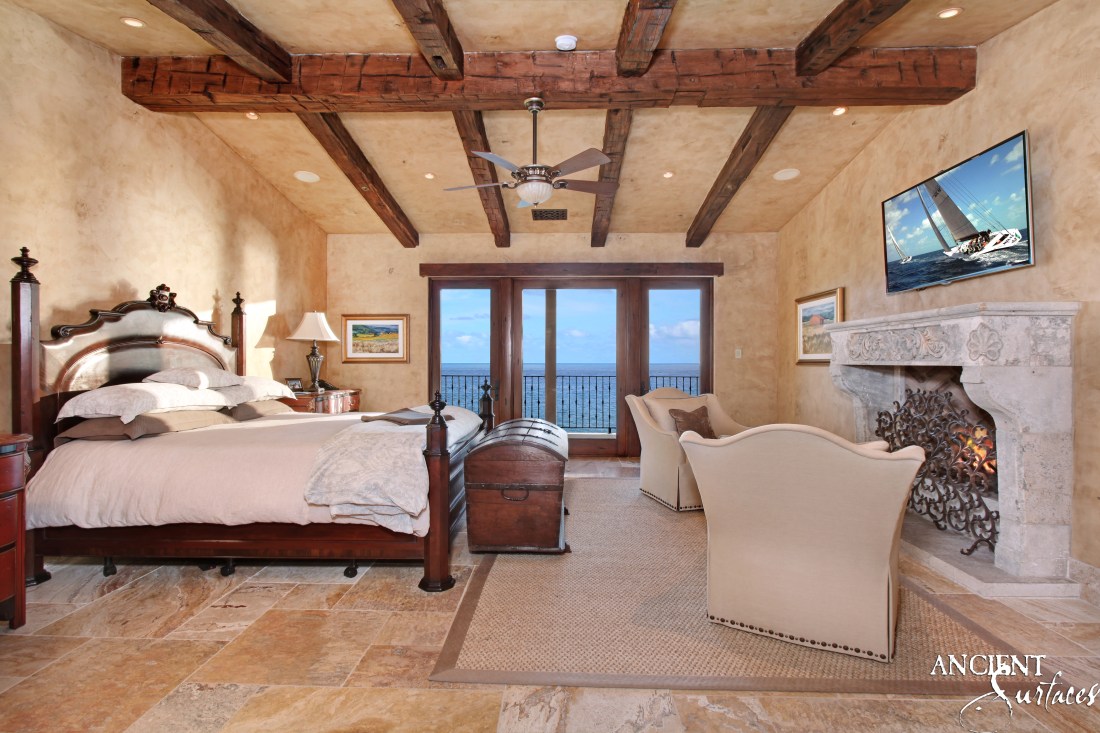
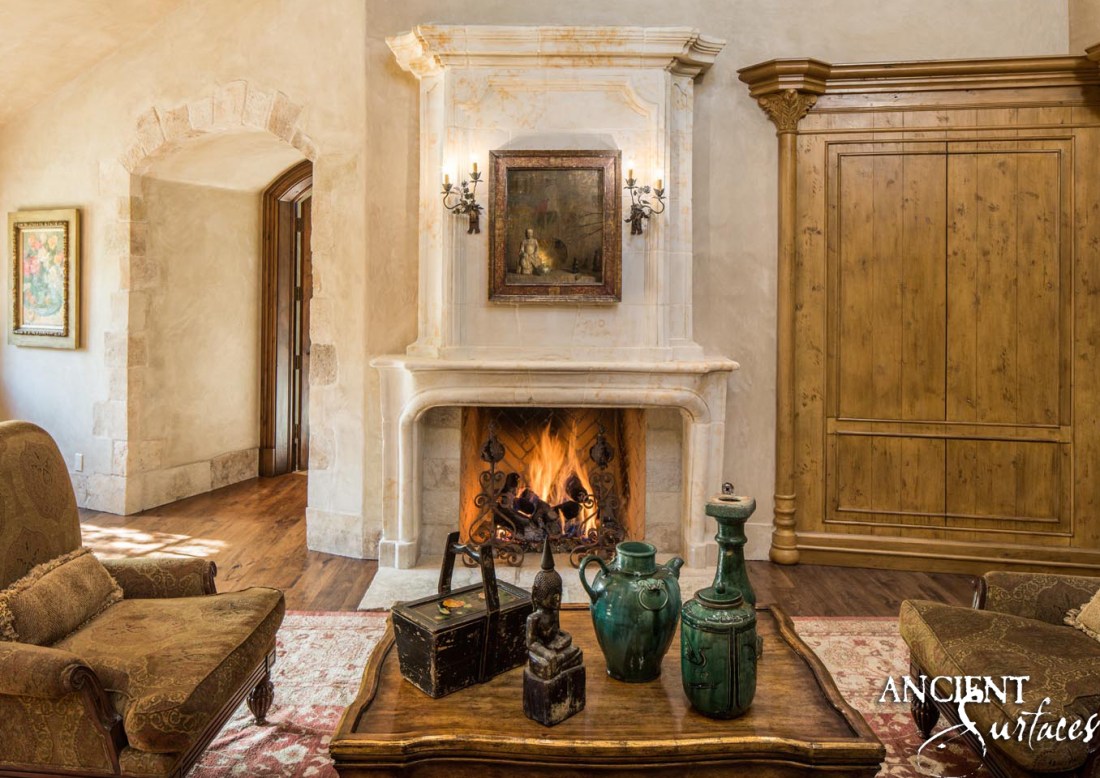 Nowadays, Newly hand carved limestone stone fireplaces are custom tailored to accommodate any firebox opening and can be carved out in any design.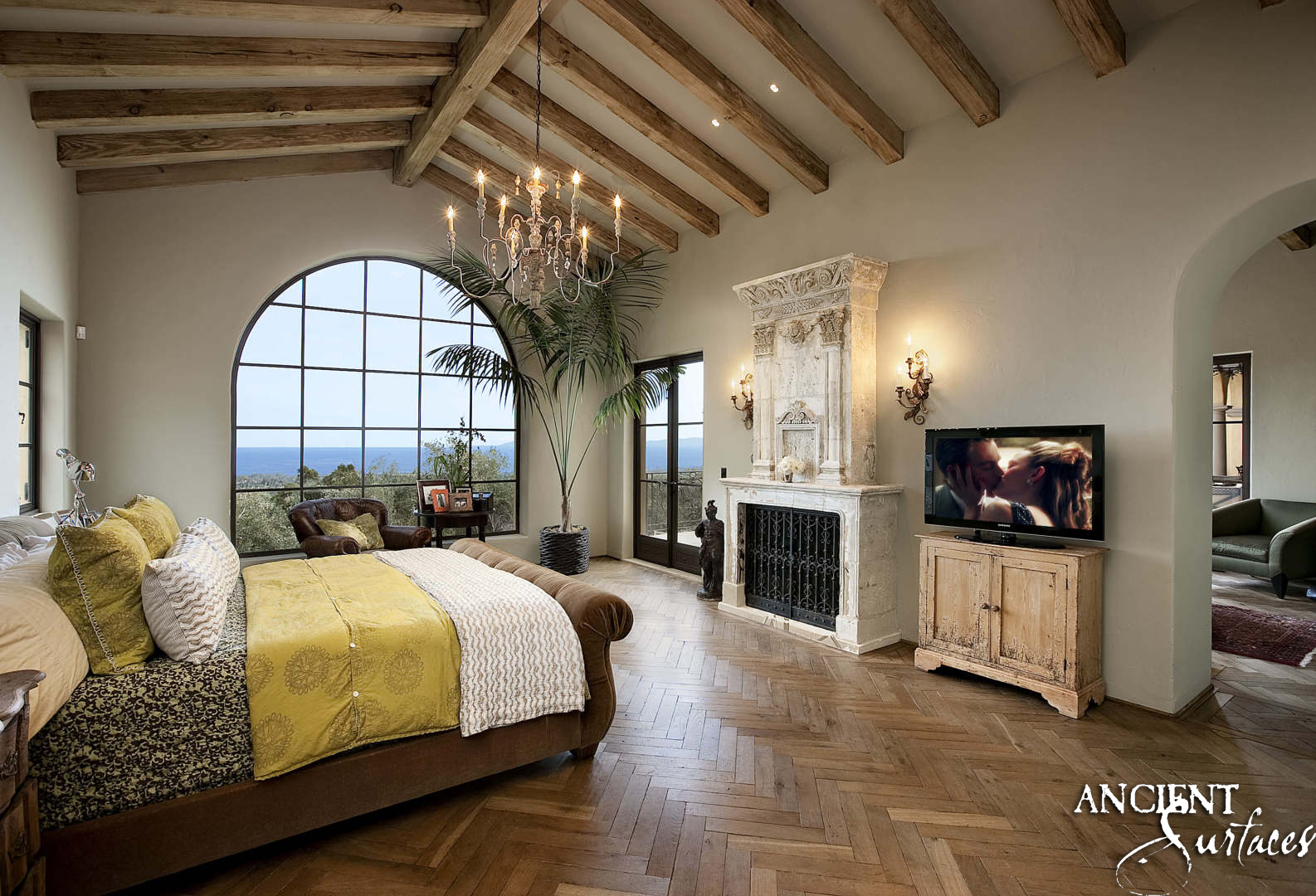
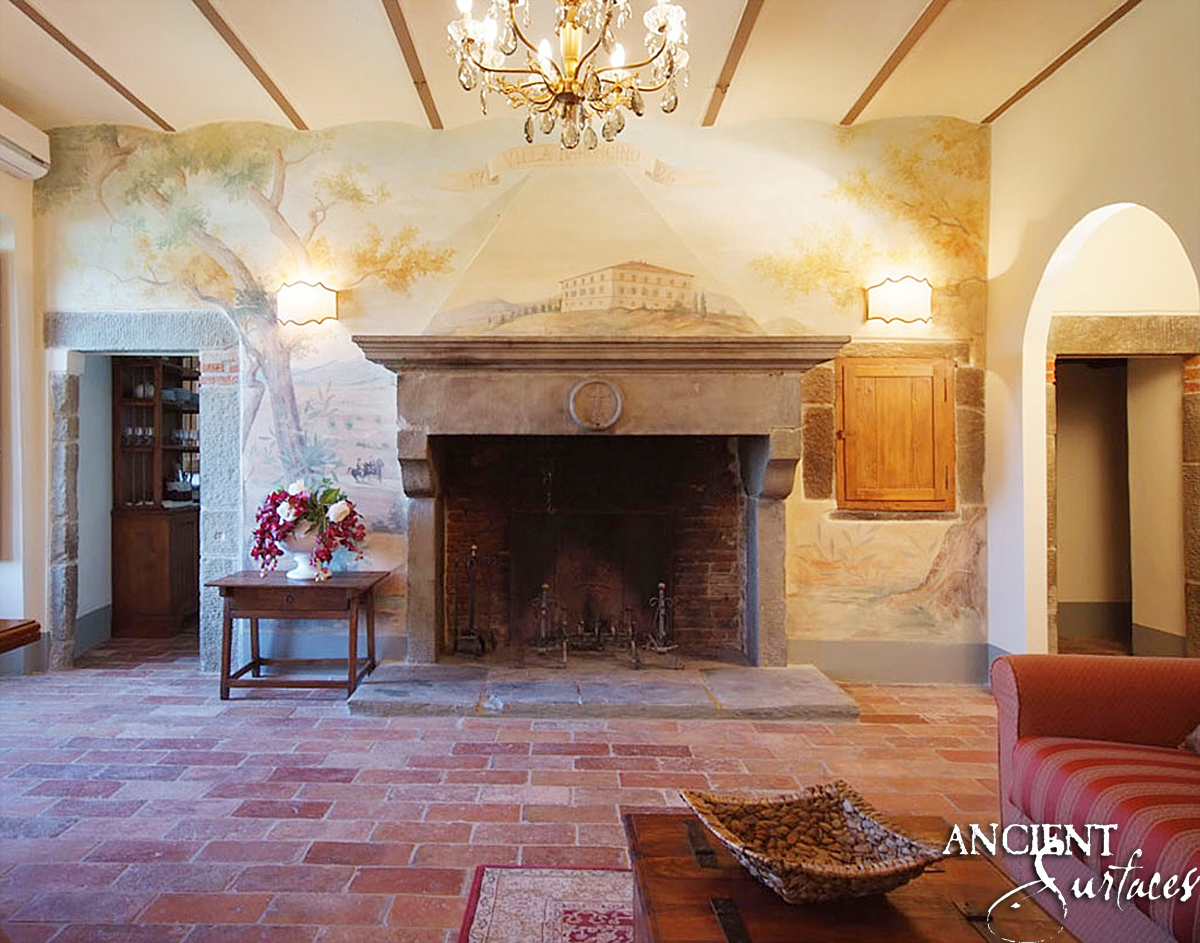

 Antique Fireplaces
You must be logged in to post a comment.